The Pacific Is Heating Up – Could 2026 Bring a Super El Niño?
Imagine record-breaking heat, crippling droughts in some regions, and catastrophic floods in others—all triggered by a massive warming in the Pacific Ocean. As of April 2026, scientists warn that the world is transitioning from ENSO-neutral conditions toward a likely El Niño by mid-2026, with a real possibility of a powerful "Super" event by late 2026 or early 2027.
A Super El Niño 2026 could amplify extreme weather patterns, push global temperatures to new highs when combined with ongoing climate change, and hit the most vulnerable regions hardest. This comprehensive guide explains everything in simple terms.
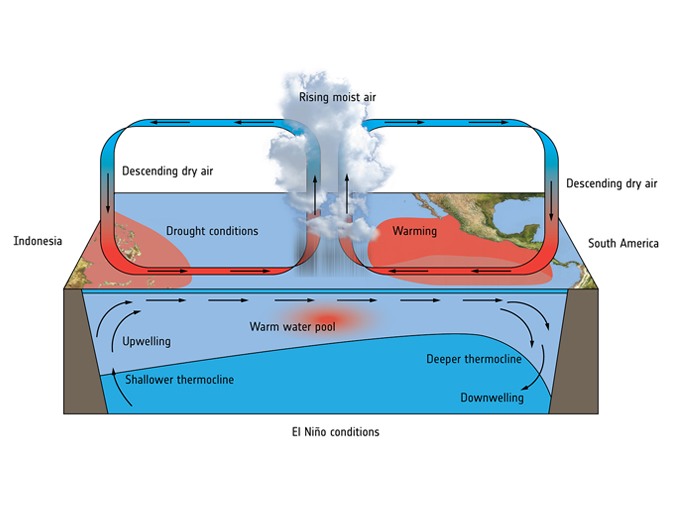
Description: Clear side-by-side diagrams showing normal Pacific conditions with strong trade winds and cool eastern waters versus weakened winds during El Niño, with warm water shifting eastward.
What Is El Niño? A Simple Explanation
El Niño is the warm phase of the El Niño–Southern Oscillation (ENSO), a natural climate cycle in the tropical Pacific.
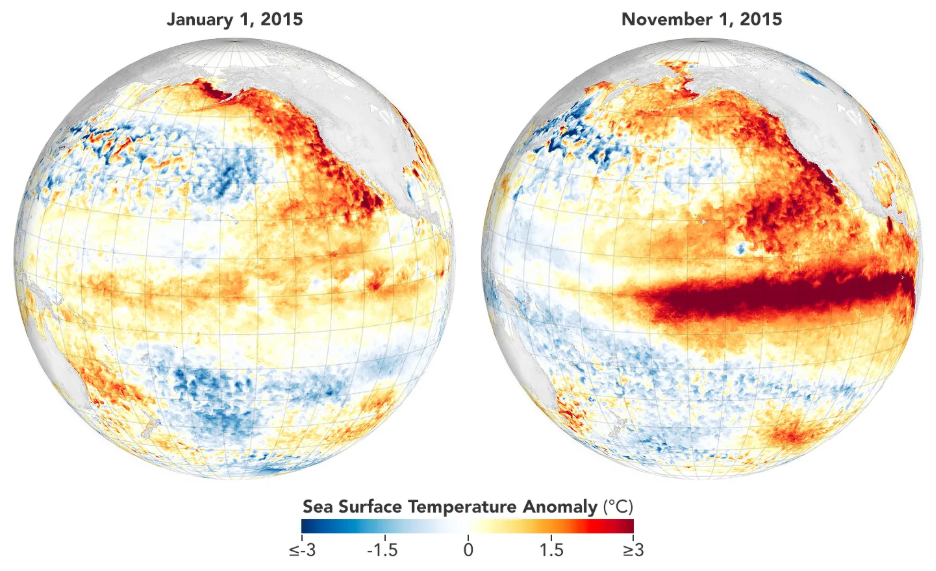
Under normal conditions, strong easterly trade winds push warm surface water westward toward Indonesia and Australia. This causes cool, nutrient-rich water to rise (upwelling) along the coasts of Peru and Ecuador, supporting rich marine life.
During El Niño, these trade winds weaken or even reverse. Warm water spreads eastward across the equatorial Pacific, suppressing upwelling and causing widespread Pacific Ocean warming. This shift disrupts global atmospheric circulation, leading to dramatic changes in rainfall and temperature patterns worldwide.
El Niño events typically last 9–18 months and occur irregularly every 2–7 years.
What Makes an El Niño “Super”?
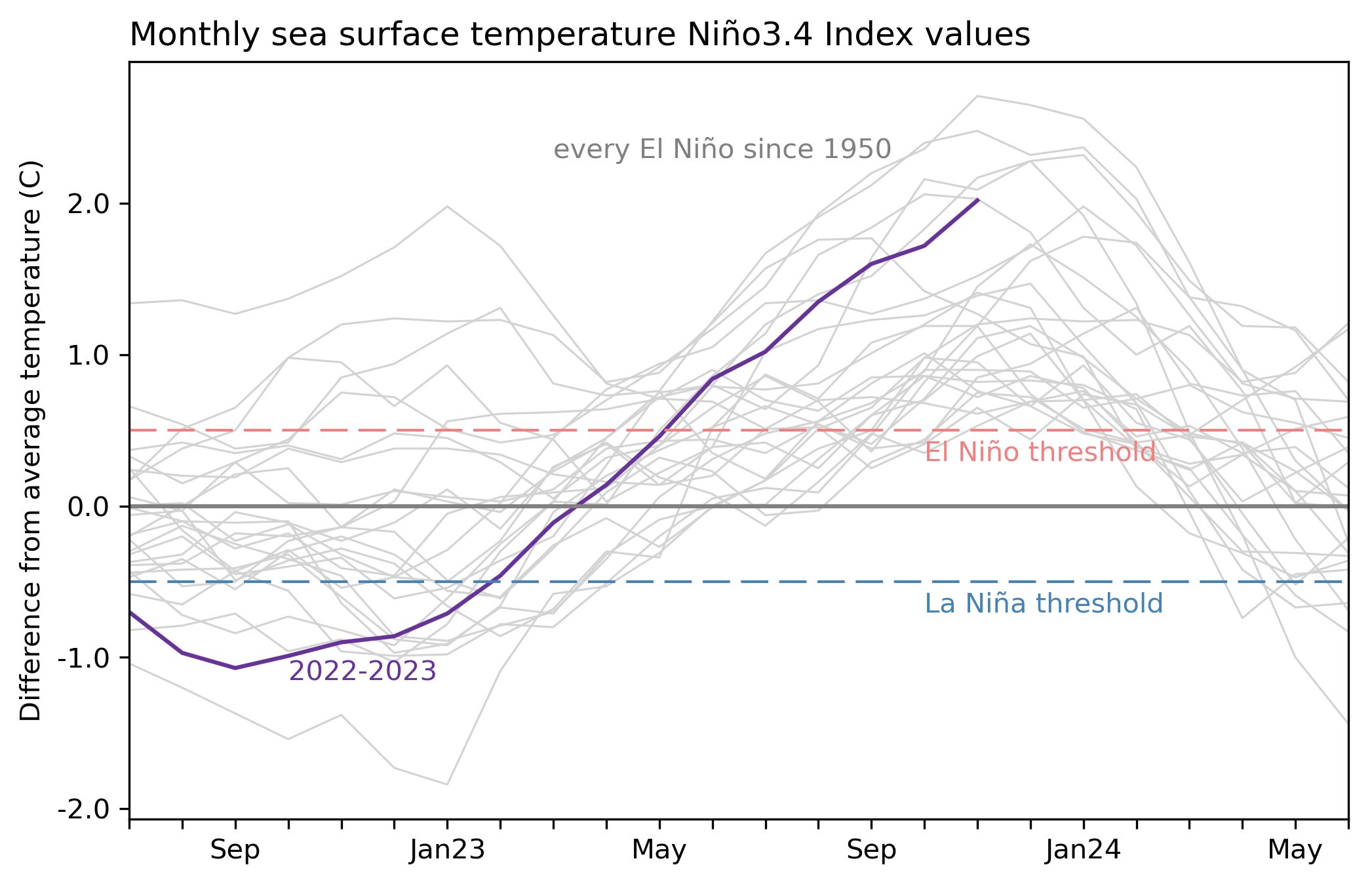
A standard El Niño is declared when sea surface temperatures in the Niño 3.4 region rise at least +0.5°C above average for several months. Strong events exceed +1.5°C, but a Super El Niño pushes beyond +2.0°C for extended periods.
These rare, intense events feature:
- More extensive and persistent ocean warming
- Stronger atmospheric coupling
- Amplified “teleconnections” — far-reaching weather impacts
Historical Super or very strong El Niños (1982–83, 1997–98, 2015–16) caused global economic losses in the tens of billions, widespread coral bleaching, massive wildfires, and thousands of deaths from related disasters.
In 2026, forecasts show a 61–70% chance of El Niño developing by summer, with roughly a 1-in-4 chance of a very strong (Super) event by winter. Combined with background global warming, it could drive record temperatures.
El Niño vs La Niña: Key Differences
El Niño and La Niña are opposite phases of ENSO.
- El Niño (Warm Phase): Weakened trade winds → Warm water east → Wetter conditions in the Americas, drier in the western Pacific/Asia/Australia.
- La Niña (Cool Phase): Stronger trade winds → Cooler eastern Pacific → Opposite effects: drier Americas, wetter western Pacific.
Here’s a clear visual comparison:
| Aspect | El Niño (Warm) | La Niña (Cool) |
|---|---|---|
| Pacific Temperatures | Warmer in central/eastern Pacific | Cooler in central/eastern Pacific |
| Trade Winds | Weakened or reversed | Stronger than normal |
| Rainfall in Americas | Increased (floods possible) | Decreased (droughts) |
| Rainfall in Asia/Australia | Decreased (droughts) | Increased (floods) |
| Global Temperature | Tends to raise global averages | Tends to slightly cool global averages |
| Typical Duration | 9–18 months | 9–24 months |
How a Super El Niño Affects Global Climate
A strong El Niño releases vast amounts of stored ocean heat into the atmosphere, contributing to global climate impact El Niño through:
- Temperature Rise: Warmer-than-average years globally.
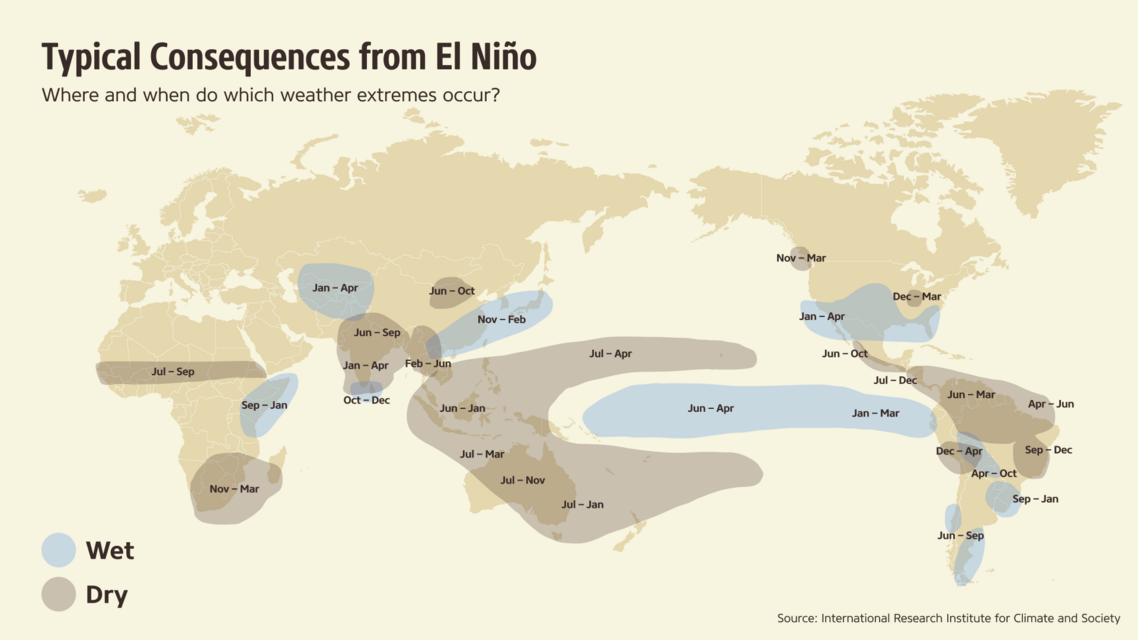
- Rainfall Shifts: Dramatic redistribution — floods in some areas, severe droughts in others.
- Extreme Weather Patterns: More intense storms, heatwaves, wildfires, and tropical cyclones in certain basins.
- Disrupted Seasons: Altered monsoons, hurricane activity, and winter patterns.
Global Impact in 2026: What to Expect
If a Super El Niño develops in 2026, expect cascading effects:
- Agriculture: Crop failures from drought in key breadbaskets or flooding in others, threatening food security.
- Water Resources: Reduced reservoirs in drought-hit areas; flooding damage to infrastructure.
- Economy: Billions in losses from disrupted trade, insurance claims, and reduced productivity.
- Health Impacts: Increased heat-related illnesses, waterborne diseases from floods, and respiratory issues from wildfires.
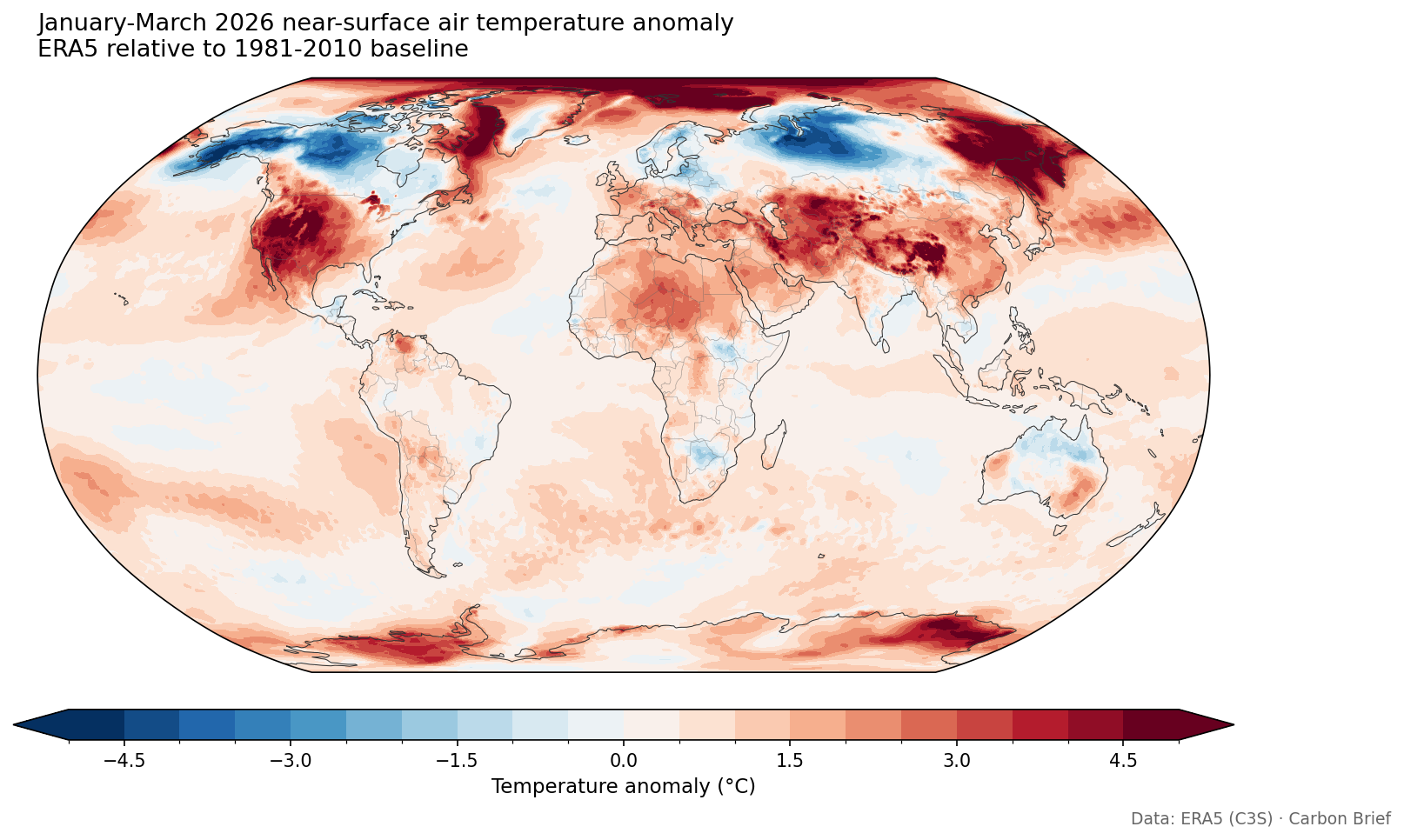
A strong 2026 event could push global temperatures toward or beyond recent records when layered on top of human-caused warming.
Most Vulnerable Regions of the World
Different areas face unique risks during a strong El Niño:
South Asia (including Pakistan, India): Weaker monsoon rains → potential drought, reduced rice/wheat yields, water shortages. Lahore and Punjab regions could see impacts on agriculture and water supply.
Southeast Asia & Indonesia: Severe drought, heightened wildfire risk, haze affecting air quality and health.
Africa: Drought in southern and eastern parts (e.g., Horn of Africa, South Africa) → food insecurity and famine risk; wetter conditions in some equatorial zones.
North America: Wetter southern U.S. and California (flood risk); warmer winters in the north; possible effects on Atlantic hurricane season.
South America: Heavy rains and flooding in Peru, Ecuador, Colombia; drought in northern Brazil and Amazon.
Australia: Drier conditions → bushfire risk and agricultural losses.

Connection Between Climate Change and El Niño
Global warming does not “cause” El Niño, but it can intensify its impacts. Warmer baseline ocean temperatures mean El Niño events release even more heat, potentially making extremes stronger or more frequent in some models. Scientific perspectives (including IPCC assessments) indicate high confidence that ENSO will remain the dominant variability mode, but confidence is lower on exact changes to frequency or amplitude. A Super El Niño on top of climate change could more easily breach 1.5°C or even approach 2°C temporary global anomalies.
Governments & Agencies: Early warning systems (NOAA, IRI, WMO), improved forecasting, strategic food/water reserves, and infrastructure resilience.
Agricultural Adaptation: Drought-resistant crops, efficient irrigation, diversified farming, and insurance schemes.
Individual Preparedness: Stay informed via reliable sources, prepare emergency kits, conserve water, and support local sustainability efforts.
Future Outlook Beyond 2026
Models suggest El Niño could persist or peak into 2027. Long-term trends point to a warming world where natural variability like ENSO interacts more intensely with human-driven climate change, potentially increasing the frequency of extreme events. Continued monitoring by NOAA, NASA, and IPCC is essential.
FAQ Section
What is a Super El Niño in simple terms? It’s an extremely strong El Niño where Pacific waters warm far above average (+2°C or more), causing more severe worldwide weather disruptions than a typical event.
How often does a Super El Niño occur? True “Super” events are rare — roughly every 10–20 years or more, though strong El Niños happen more frequently.
Which countries or regions are most affected? Southeast Asia, Australia, parts of Africa, South America (Peru/Ecuador for floods, Brazil for drought), and South Asia often face the strongest impacts.
Is El Niño getting stronger due to climate change? While natural variability drives ENSO, a warmer baseline ocean and atmosphere can amplify the global effects of El Niño events.
Will Super El Niño 2026 cause record heat? It significantly raises the odds, especially when combined with ongoing global warming.
How does El Niño affect Pakistan or Lahore? Potential for altered monsoon patterns, affecting rainfall, agriculture in Punjab, and water availability.
Conclusion
A potential Super El Niño 2026 serves as a powerful reminder of our planet’s interconnected climate system. While we cannot prevent natural ENSO cycles, understanding what is El Niño, preparing for its global climate impact, and tackling the underlying drivers of climate change and El Niño interactions can reduce suffering and build resilience.
Stay updated through authoritative sources like NOAA and the International Research Institute for Climate and Society (IRI). Proactive adaptation today will help protect the most vulnerable regions tomorrow.
Sources include latest NOAA CPC/IRI ENSO outlooks (April 2026) and historical analyses. Forecasts carry uncertainty — monitor official updates.


0 Comments