
🔍 What Controls Population Size?
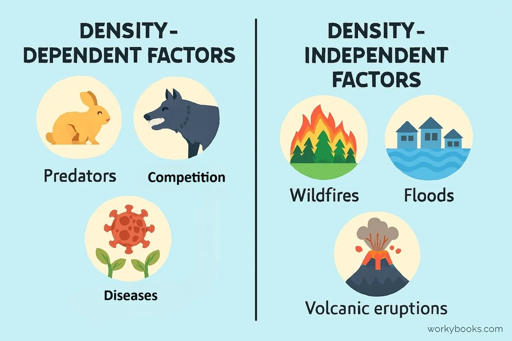
Imagine a forest teeming with deer. What prevents their population from growing infinitely? The answer lies in two types of ecological forces: density-dependent factors that intensify as populations grow (like competition and disease), and density-independent factors that strike regardless of population size (like wildfires and floods). Together, these forces maintain the delicate balance of nature by regulating population growth, preventing overexploitation of resources, and ensuring ecosystem stability.
📊 Understanding Population Regulation
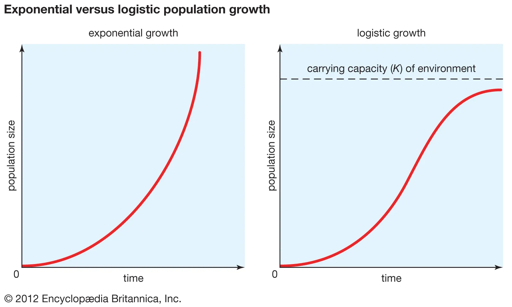
In nature, populations cannot grow indefinitely due to limited resources and environmental constraints. Environmental resistance—the combination of all limiting factors—opposes the biotic potential (maximum reproductive capacity) of organisms, creating a balance that determines actual population size. Density-dependent and density-independent factors together constitute this environmental resistance, determining the carrying capacity (K), which is the maximum population size an environment can sustainably support without degradation. When populations exceed carrying capacity, negative feedback mechanisms activate, reducing population size back to sustainable levels through increased mortality or decreased reproduction.
🌿 Density-Dependent Factors: The Self-Regulating Force
💡 Definition
Density-dependent factors are biotic or abiotic influences whose effects on population growth, survival, and reproduction intensify with increasing population density. These factors create negative feedback loops that stabilize populations around carrying capacity, acting as nature's built-in population control mechanisms that prevent unlimited growth and resource exhaustion.
🎯 Key Characteristics
- Self-Regulating: Act as natural checks preventing overpopulation by increasing mortality or decreasing birth rates as density rises
- Negative Feedback: Impact strengthens proportionally as population expands, creating stabilizing feedback that maintains equilibrium
- Biotic Nature: Most are living factors (predators, competitors, pathogens, parasites) that respond dynamically to population changes
- Carrying Capacity: Maintain populations at sustainable levels by balancing resource availability with population demands
- Time-Delayed Response: Effects may lag behind population changes, sometimes causing population oscillations around carrying capacity
🔬 Major Types with Examples
1. 🍽️ Competition for Resources
As population density increases, individuals compete more intensely for limited resources like food, water, light, space, and nutrients. This intraspecific competition (within species) reduces individual fitness, growth rates, and reproductive success, ultimately limiting population size. Competition can be direct (aggressive interactions) or indirect (resource depletion).
🌲 Plant Example: Forest Self-Thinning
In dense forests, trees compete for sunlight, water, and soil nutrients. Larger, established trees shade out smaller saplings, causing mortality through light deprivation. This self-thinning process follows the -3/2 power law, where plant biomass increases as population density decreases. Eventually, remaining trees have adequate resources, and population stabilizes at carrying capacity.
🦌 Animal Example: Overgrazing in Savannas
In African savannas, overpopulated herbivores (wildebeest, zebra, gazelles) overgraze grasslands during dry seasons, leading to food scarcity, malnutrition, starvation, and population decline. As vegetation recovers in wet seasons, populations can increase again, creating cyclical fluctuations around carrying capacity.
2. 🦁 Predation
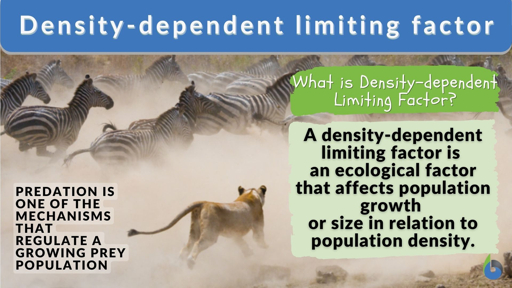
Predators more easily locate, capture, and kill prey in dense populations due to increased encounter rates. This creates a negative feedback loop: as prey density increases, predation rate increases, reducing prey population. Conversely, when prey becomes scarce, predators switch to alternative prey or experience reduced reproduction, allowing prey populations to recover. This dynamic creates classic predator-prey cycles observed in nature.
🐟 Aquatic Example: Fish Schools and Predator Attraction
Dense schools of fish attract more predators (sharks, dolphins, larger fish) through visual and chemical cues. Predators can feed more efficiently in dense prey aggregations, leading to higher per-capita mortality rates. This regulates fish population size naturally and prevents overpopulation that could deplete plankton resources.
3. 🦠 Disease and Parasitism
High population densities facilitate rapid disease transmission through multiple pathways: direct physical contact, airborne spores or droplets, contaminated water or food sources, and vector-borne transmission. Pathogens and parasites reproduce faster in dense host populations, causing epidemics that reduce survival and reproduction. Disease impact is proportional to host density, making it a classic density-dependent factor.
🌾 Agricultural Example: Crop Disease Epidemics
Dense monoculture crops (wheat, rice, corn) create ideal conditions for fungal pathogens (rusts, blights, mildews) and bacterial diseases. Spores spread rapidly through contiguous plant canopies via wind and rain splash. The Irish Potato Famine (1845-1849) exemplifies this—dense potato plantings enabled Phytophthora infestans to devastate entire regions, causing mass starvation.
4. ☠️ Waste Accumulation and Toxicity
Dense populations generate metabolic waste products (ammonia, CO₂, organic compounds) and allelopathic chemicals that accumulate in the environment, creating toxic conditions. In aquatic systems, waste decomposition depletes dissolved oxygen. In terrestrial systems, soil toxicity from accumulated metabolites inhibits growth and reproduction, limiting population size.
🐟 Aquatic Example: Eutrophication and Dead Zones
Excessive algal blooms from nutrient pollution deplete oxygen through bacterial decomposition, creating hypoxic "dead zones" where fish and invertebrates cannot survive. In closed systems like aquariums or ponds, ammonia from fish waste accumulates to toxic levels, causing mass mortality unless water is changed or filtered.
5. 😰 Social Stress and Behavioral Changes
Overcrowding induces physiological and behavioral stress, particularly in social species. Stress hormones (cortisol, corticosterone) suppress immune function, reduce reproductive hormones, and increase aggression. This leads to reduced birth rates, increased infant mortality, territorial fighting, and in extreme cases, population crashes through cannibalism or mass emigration.
🐭 Laboratory Example: Rodent Population Crashes
John Calhoun's "mouse utopia" experiments showed that in crowded conditions with unlimited food, rodent populations still crashed due to social stress. Behaviors included: reduced maternal care, infanticide, hyper-aggression, social withdrawal, and reproductive suppression. Similar patterns occur in wild lemming and vole populations during peak density years.
📈 Ecological Impacts
- ✓ Maintain populations at carrying capacity through negative feedback regulation
- ✓ Shape species interactions and community structure through competition and predation
- ✓ Prevent resource depletion and habitat destruction by limiting population size
- ✓ Create population cycles (predator-prey dynamics) with regular oscillations
- ✓ Drive evolutionary adaptations through natural selection (e.g., disease resistance, competitive ability)
🌍 Density-Independent Factors: The Unpredictable Force
💡 Definition
Density-independent factors are environmental influences that affect population size, survival, and reproduction regardless of population density. These are typically abiotic forces (climate, weather, geological events) or random catastrophic events that cause sudden, dramatic population changes without feedback regulation. Unlike density-dependent factors, they do not maintain populations at carrying capacity but can reset population dynamics entirely.
🎯 Key Characteristics
- Uniform Impact: Affect all individuals equally, regardless of population density—sparse and dense populations suffer similar proportional losses
- Abiotic Nature: Mostly non-living physical and chemical factors (temperature, precipitation, natural disasters, pollution)
- Unpredictable: Often sudden, random events (storms, fires, earthquakes) that are difficult to forecast or prevent
- No Feedback: Don't regulate populations sustainably—effects are immediate and don't adjust based on carrying capacity
- Catastrophic Impact: Can cause mass mortality events, local extinctions, or ecosystem-wide changes
- Climate-Driven: Many are influenced by climate patterns, making them increasingly important under climate change
🔥 Major Types with Examples
1. 🌡️ Climatic Factors (Temperature and Precipitation)
Climate variables affect all organisms within affected areas uniformly. Temperature extremes (heatwaves, frosts, cold snaps) can kill organisms directly through thermal stress or indirectly by altering resource availability. Precipitation patterns (droughts, floods, excessive rainfall) determine water availability, affecting survival, reproduction, and habitat quality for all species in the ecosystem.
- Temperature Extremes: Heatwaves cause thermal stress, protein denaturation, and death in plants and animals. Unseasonal frosts destroy crops, flowers, and young tissues, affecting entire food chains. Coral bleaching occurs when water temperatures exceed thermal tolerance.
- Rainfall Variability: Prolonged droughts cause water scarcity, vegetation die-off, and mass mortality of herbivores. Excessive rainfall causes flooding, soil erosion, and habitat destruction. Monsoon failures devastate agricultural systems and wildlife populations.
⚠️ Real Impact: African Drought Cycles
Prolonged drought in East African savannas (e.g., 2009-2011, 2016-2017) caused mass mortality of herbivores (elephants, wildebeest, zebras) regardless of initial population density. Water sources dried up, grasslands turned to dust, leading to widespread starvation. Over 200,000 wildebeest died in 2009 drought alone, demonstrating density-independent impact.
2. 🌋 Natural Disasters (Catastrophic Events)
Natural disasters are sudden, severe events that cause widespread mortality and habitat destruction. They operate independently of population density—a sparse population in a disaster zone suffers similar proportional losses as a dense population. These events can reset ecological succession, alter landscapes, and create opportunities for pioneer species.
- Floods: Destroy habitats, wash away organisms, drown terrestrial species, contaminate water sources, and disrupt food chains. River flooding in riparian ecosystems eliminates nesting sites and burrows.
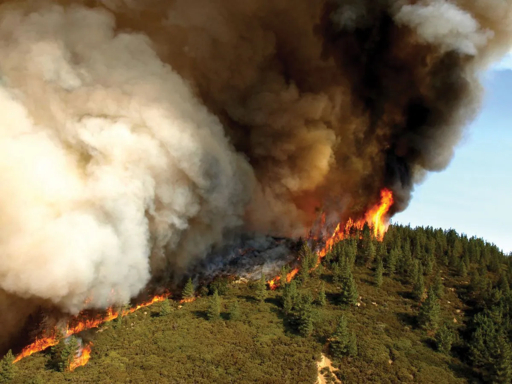
- Wildfires: Decimate forests and grasslands, killing organisms indiscriminately through burning, smoke inhalation, and habitat loss. Fire-adapted ecosystems depend on periodic fires for regeneration.
- Earthquakes: Dramatically alter landscapes through ground shaking, landslides, and tsunamis, causing habitat destruction and direct mortality.
- Hurricanes/Typhoons: Devastate coastal ecosystems through high winds, storm surges, and flooding, affecting marine and terrestrial populations.
🇦🇺 Case Study: Australian Bushfires (2019-2020)
Massive wildfires ("Black Summer") burned over 18 million hectares across Australia, killing an estimated 3 billion animals (koalas, kangaroos, wallabies, birds, reptiles). Impact was uniform—dense and sparse populations alike were devastated. Some species lost 30-50% of their habitat, pushing endangered species closer to extinction. Fire intensity, not population density, determined mortality rates.
3. 🏭 Human Activities (Anthropogenic Factors)
Human activities increasingly dominate as density-independent factors affecting global populations. Habitat destruction, pollution, climate change, and resource extraction impact ecosystems regardless of native population densities. These factors often act synergistically, amplifying their effects beyond natural environmental variation.
- Deforestation: Clear-cutting forests eliminates habitat for all species uniformly, regardless of their population density. Tropical deforestation threatens 80% of terrestrial biodiversity.
- Pollution: Chemical spills, oil spills, pesticide runoff, and industrial waste kill organisms indiscriminately. Toxic substances bioaccumulate through food chains, affecting top predators most severely.
- Climate Change: Global warming causes coral bleaching, species distribution shifts, phenological mismatches, and extreme weather intensification. Affects all populations within affected climate zones.
- Urbanization: Habitat fragmentation isolates populations, reduces genetic diversity, and creates barriers to migration and gene flow.
⚠️ Real Impact: Deepwater Horizon Oil Spill (2010)
The largest marine oil spill in history released 4.9 million barrels of crude oil into the Gulf of Mexico over 87 days. Marine life (fish, seabirds, marine mammals, sea turtles, invertebrates) died indiscriminately—population density didn't matter. Toxic oil coated coastlines, destroyed wetlands, and contaminated food chains. An estimated 800,000 seabirds, 65,000 sea turtles, and countless fish died, demonstrating uniform density-independent impact.
4. 🌊 Other Abiotic Factors
- Soil Quality Changes: Salinization from irrigation, acidification from pollution, or nutrient depletion render habitats uninhabitable for plants and soil organisms regardless of their density.
- Sunlight Variability: Seasonal changes, volcanic ash clouds (e.g., Mt. Pinatubo 1991), or atmospheric dust reduce photosynthesis rates, affecting primary producers and cascading through food chains.
- Ocean Acidification: Increased CO₂ absorption lowers ocean pH, affecting all marine calcifying organisms (corals, mollusks, plankton) by reducing calcium carbonate availability for shells and skeletons.
- Natural Resource Availability: Changes in mineral deposits, groundwater levels, or geological features affect populations uniformly within affected areas.
📊 Effects on Populations
- ✗ Cause abrupt, unpredictable population changes—can reduce populations by 50-100% in single events
- ✗ No long-term regulation—immediate impact only, populations may recover if habitat remains
- ✗ Effects cascade through ecosystems, altering food chains, community structure, and ecosystem function
- ✗ Species vulnerability: Endemic, specialized, or small-range species most at risk of extinction
- ✗ Can create ecological opportunities for pioneer species and ecosystem reset through succession
- ✗ Increasing frequency under climate change, making populations more vulnerable to stochastic events
⚖️ Comparing Both Factor Types
🌿 Density-Dependent
- Intensity varies with density—stronger effect at high density
- Mostly biotic (living factors: predators, competitors, pathogens)
- Negative feedback regulation—stabilizes populations
- Maintain carrying capacity (K) long-term
- Examples: competition, predation, disease, territoriality, waste accumulation
- Effect: Gradual regulation—populations oscillate around K
- Predictable and responsive to population changes
🌍 Density-Independent
- Intensity independent of density—same proportional effect at any density
- Mostly abiotic (non-living: climate, disasters, pollution)
- No feedback regulation—no stabilizing mechanism
- Cause sudden changes—can devastate populations instantly
- Examples: temperature, floods, fires, hurricanes, pollution, earthquakes
- Effect: Immediate impact—populations crash or boom unpredictably
- Unpredictable and stochastic (random) in nature
🔗 Interplay Between Both Factors
Though operating through different mechanisms, density-dependent and density-independent factors often interact synergistically, amplifying their combined effects on populations:
- Drought (density-independent) reduces plant populations and water availability → increases competition (density-dependent) among herbivores for remaining food and water sources, intensifying mortality beyond drought effects alone
- Wildfire (density-independent) reduces population size and destroys habitat → survivors benefit from reduced competition (density-dependent) for resources during recovery phase, enabling rapid population growth
- Flood (density-independent) destroys habitat and displaces organisms → forces survivors into smaller, fragmented areas → intensifies competition and disease transmission (density-dependent) in refugia
- Hurricane (density-independent) damages coral reefs → weakened corals become susceptible to disease outbreaks (density-dependent), causing additional mortality
🌊 Real-World Interaction: Coral Reef Degradation
Step 1: Rising sea temperatures (density-independent climate factor) cause coral bleaching—corals expel symbiotic algae, losing color and energy source
Step 2: Reduced coral cover and weakened corals increase competition (density-dependent biotic factor) among surviving corals for space, light, and nutrients
Step 3: Thermally stressed corals become susceptible to disease (density-dependent pathogen factor), with diseases spreading faster in dense coral aggregations
Step 4: Combined effects cause coral mortality, reef degradation, and loss of habitat for reef fish—demonstrating how both factor types interact to drive ecosystem change
🌍 Applications in Conservation and Management
🛡️ Conservation Strategies
- Wildlife Management: Control overpopulation through regulated culling, hunting quotas, or predator reintroduction to restore density-dependent regulation
- Disaster Preparedness: Create wildlife corridors and habitat connectivity to enable migration and escape during natural disasters (fires, floods)
- Climate Mitigation: Reduce greenhouse gas emissions to decrease frequency and intensity of density-independent climate events (heatwaves, storms, droughts)
- Habitat Restoration: Restore degraded ecosystems to reduce density-dependent pressures (competition, disease) and increase carrying capacity
- Biodiversity Monitoring: Identify species vulnerable to density-independent events (endemics, specialists, small populations) for priority conservation action
- Pollution Control: Regulate industrial emissions, agricultural runoff, and waste disposal to minimize anthropogenic density-independent impacts
- Protected Areas: Establish reserves and marine protected areas to shield populations from human-induced density-independent factors
📝 Key Points for Exams
- Density-dependent factors intensify with population density (competition, predation, disease, territoriality)
- Density-independent factors affect populations regardless of density (climate, disasters, pollution, human activities)
- Density-dependent factors create negative feedback loops maintaining populations at carrying capacity (K)
- Density-independent factors cause sudden, unpredictable population changes—can be catastrophic
- Both factor types interact synergistically to shape population dynamics and community structure
- Carrying capacity (K) is determined primarily by density-dependent factors (resource availability, competition)
- Conservation must address both factor types for effective population and ecosystem management
- Climate change is increasing frequency of density-independent events, threatening global biodiversity
- Logistic growth (S-curve) reflects density-dependent regulation; exponential growth (J-curve) occurs when density-dependent factors are absent


.jpg)





1 Comments
resource allocation topic notes
ReplyDelete