Ch#22 Variations & Genetics – Bombay Phenotype, Sex Limited Traits, MODY & Colour Blindness | Full Short Notes

Chapter 22: Variations & Genetics
Short Answers (2–3 Marks) – Punjab Board / RTS / HED Exams (Write exactly like this — point-wise + table + example = full marks)
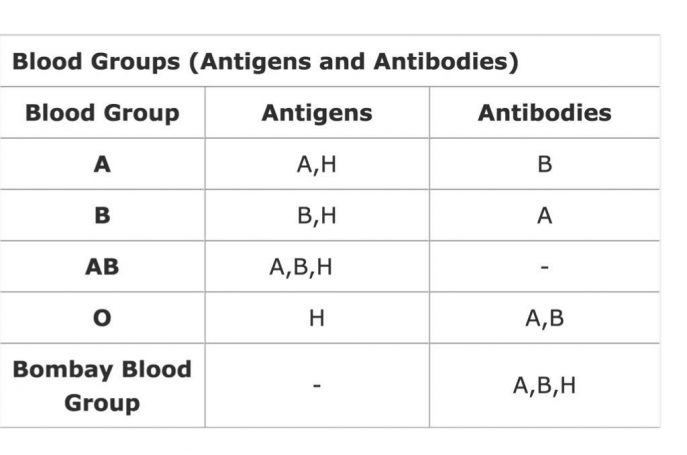
1) What is Bombay Phenotype?
Bombay Phenotype (hh): Rare blood group in which person lacks H antigen on RBCs due to homozygous recessive hh genotype (H gene on chromosome 19). Even if I^A or I^B alleles are present, no A or B antigens form → phenotype appears as blood group O. Has anti-H antibodies in plasma.
- Can donate to anyone but can receive only from Bombay phenotype persons.
- Discovered in Mumbai (1952).
- Classic example of epistasis.

2) Difference between Multifactorial and Polygenic Traits
3) Give formula to calculate recombination frequency
Recombination frequency (RF) =
- Unit = % or centimorgan (cM)
- Used to find distance between two genes on chromosome.
4) Difference between Sex Chromosomes and Autosomes
5) Give types of colour blindness
Colour blindness (X-linked recessive):
- Red-Green (most common): – Protanopia (no red cones) – Deuteranopia (no green cones)
- Blue-Yellow: Tritanopia (no blue cones)
- Total: Achromatopsia (no colour vision at all)
:max_bytes(150000):strip_icc()/visiblecolorspectrumcomparison-a6ad132979ca421fb0de7952a3cc2e2c.jpg)

6) What is Testicular Feminization Syndrome?
Testicular Feminization Syndrome (Complete Androgen Insensitivity Syndrome – CAIS): Genetically XY male but due to mutation in androgen receptor gene (on X chromosome), body cannot respond to testosterone.
- External female phenotype (breasts develop at puberty)
- No uterus/ovaries, testes present (undescended)
- Sterile, blind vaginal pouch
- Female external genitalia but male karyotype (46,XY)

7) What is Sex Limited Trait?
Sex Limited Trait: Traits expressed only in one sex although genes are present in both sexes (expression controlled by sex hormones). Genes are autosomal. Examples:
- Beard growth & voice deepening → males only
- Milk production & breast development → females only
8) What is MODY? Give its causes
MODY (Maturity Onset Diabetes of the Young): Rare monogenic form of diabetes appearing before 25 years of age. Mild symptoms, no obesity or ketoacidosis, autosomal dominant inheritance. Treated with oral drugs (not insulin).
Causes: Mutations in single genes that control insulin secretion (e.g., HNF1A, HNF4A, GCK, PDX1 etc.).
Exam Tip:
- Bombay + epistasis = 3-mark favourite
- Colour blindness types + diagram = full marks
- Testicular feminization = “XY but female phenotype” line is must
Long Questions
Discuss sex linkage in human with example.
Sex Linkage in Humans Long Question Note – Class 12 Biology (7–8 Marks) (RTS/HED/Punjab Board Exam Pattern – NCERT Based)
Definition
Sex linkage (or X-linked inheritance) is the phenomenon in which a gene is located on the sex chromosomes (X or Y) instead of autosomes. Most sex-linked traits are X-linked because the X chromosome is larger and carries many genes, while the Y chromosome has very few genes.
In humans:
- Females have XX (two X chromosomes)
- Males have XY (one X and one Y chromosome)
Therefore, males express X-linked recessive traits even if they inherit only one recessive allele (because they have only one X chromosome – hemizygous).
Characteristics of X-Linked Inheritance
- Criss-cross inheritance: The trait is transmitted from father to daughter and then from daughter to son.
- More common in males than females (because males need only one recessive allele).
- Never transmitted from father to son (because son gets Y chromosome from father).
- Females are usually carriers (heterozygous) and do not show the trait.
Most Important Examples (Always Write These in Exam)
1. Colour Blindness (Red-Green Colour Blindness)
- Caused by recessive gene (c) on X chromosome.
- Normal allele = C
- Genotypes:
- Female: X^C X^C (normal), X^C X^c (carrier), X^c X^c (colour blind)
- Male: X^C Y (normal), X^c Y (colour blind)
Cross: Carrier female (X^C X^c) × Normal male (X^C Y)
| Gametes | X^C | X^c |
|---|---|---|
| X^C | X^C X^C (Normal ♀) | X^C X^c (Carrier ♀) |
| Y | X^C Y (Normal ♂) | X^c Y (Colour blind ♂) |
Result: 50% sons colour blind, 50% daughters carriers.
2. Haemophilia (Bleeder’s Disease)
- X-linked recessive disorder.
- Blood fails to clot due to lack of clotting factor VIII or IX.
- Also called Royal Disease (Queen Victoria was carrier).
- Same inheritance pattern as colour blindness.
Cross: Carrier female × Normal male → 50% sons haemophilic.
Y-Linked Traits (Holandric Traits)
- Genes present only on Y chromosome.
- Transmitted only from father to son.
- Examples: Hypertrichosis (hairy ears), some cases of male infertility.
Summary Table (Draw in Exam – Full Marks)
| Feature | X-Linked Traits | Y-Linked Traits |
|---|---|---|
| Location | X chromosome | Y chromosome |
| Seen in | More in males | Only in males |
| Transmission | Father → Daughter → Son (criss-cross) | Father → Son only |
| Examples | Colour blindness, Haemophilia | Hairy ears, some infertility |
| Females affected | Rare (needs two copies) | Never |
Important Exam Lines (Write these)
- “Sex linked traits are located on X or Y chromosome.”
- “Males are hemizygous for X-linked genes.”
- “Colour blindness and Haemophilia are classic examples of X-linked recessive inheritance.”
- “No father-to-son transmission in X-linked traits.”
Exam Strategy for 8 Marks:
- Definition + reason why X-linked more common (2 marks)
- Characteristics (2 marks)
- Detailed example of Colour Blindness with Punnett square & diagram (3 marks)
- One more example (Haemophilia) + table (1 mark)
This is the complete long answer exactly as expected in Punjab Board/RTS/HED exams. Memorise the table and Punnett square — they fetch full marks.
Discuss the genetics of colorblindness.
Genetics of Colour Blindness Long Question Note – Class 12 Biology (7–8 Marks) (RTS/HED/Punjab Board / NCERT Pattern)
Definition
Colour blindness (Daltonism) is an X-linked recessive genetic disorder in which a person is unable to distinguish certain colours, especially red and green. It is caused by mutation in genes responsible for colour-sensitive pigments (opsins) in cone cells of the retina.
Genetic Basis
- The genes for red and green colour vision are located on the X chromosome (Xq28).
- Normal allele = X^C (dominant)
- Colour blind allele = X^c (recessive)
- Y chromosome does not carry this gene.
Genotypes:
- Normal female: X^C X^C
- Carrier female: X^C X^c (normal vision but carries the gene)
- Colour blind female: X^c X^c (very rare)
- Normal male: X^C Y
- Colour blind male: X^c Y (common)
Why More Common in Males?
Males have only one X chromosome (hemizygous). If they inherit X^c from mother, they express the trait. Females need two copies (X^c X^c) to be affected, which is rare.
Types of Colour Blindness
- Red-Green Colour Blindness (most common – 99% cases)
- Protanopia: No red cones (red appears dark)
- Deuteranopia: No green cones (green appears yellow-brown)
- Blue-Yellow Colour Blindness (Tritanopia) – rare
- Total Colour Blindness (Achromatopsia) – extremely rare
Inheritance Pattern (Criss-Cross Inheritance)
Example 1: Carrier female × Normal male (most important cross)
| Mother Gametes → | X^C | X^c |
|---|---|---|
| Father Gametes | ||
| X^C | X^C X^C (Normal ♀) | X^C X^c (Carrier ♀) |
| Y | X^C Y (Normal ♂) | X^c Y (Colour blind ♂) |
Result in F1:
- 50% sons colour blind
- 50% daughters carriers
- No colour blind daughter
Example 2: Colour blind male × Normal female
- All sons normal
- All daughters carriers
Key Point: A colour blind father never passes the trait directly to his son (because son gets Y from father).
Pedigree Analysis (Important for Exams)
- More males affected
- Skips generations through carrier females
- No male-to-male transmission
Other Important Points
- Ishihara test is used to diagnose colour blindness.
- It is not curable but can be managed with special lenses.
- Example of sex-linked recessive trait along with haemophilia.
Summary Table (Draw in Exam)
| Genotype | Female Phenotype | Male Phenotype |
|---|---|---|
| X^C X^C | Normal | — |
| X^C X^c | Carrier (Normal) | — |
| X^c X^c | Colour blind (Rare) | — |
| X^C Y | — | Normal |
| X^c Y | — | Colour blind (Common) |
Exam Lines to Score Full Marks:
- “Colour blindness is X-linked recessive disorder.”
- “Males are more affected because they are hemizygous.”
- “Carrier females transmit the trait to 50% of their sons.”
- “No father-to-son transmission.”


0 Comments