
Why does a cactus thrive in the harsh Thar Desert while a lotus floats gracefully on a pond? The secret lies in plant adaptation and distribution in relation to water availability: xerophytes, hydrophytes, and mesophytes explained. Through sophisticated plant water adaptation strategies, these three major plant groups have evolved to occupy vastly different habitats based on water availability. Understanding plant distribution and water availability is essential for students, ecologists, and gardeners alike. This comprehensive guide explores xerophytes characteristics, hydrophytes examples, mesophytes plants, and their ecological significance.
Water Availability and Plant Distribution
Water is the primary driver of plant distribution and water availability across ecosystems. Plants are distributed along a moisture gradient — from extremely dry (xeric) to water-saturated (hydric) environments.
- Arid zones favor drought-resistant xerophytes
- Moderate rainfall zones support versatile mesophytes
- Aquatic and wetland areas are dominated by hydrophytes
This natural zoning influences global biodiversity, agriculture, and conservation efforts.
Figure 1: Water Availability Gradient – Distribution of Xerophytes, Mesophytes, and Hydrophytes
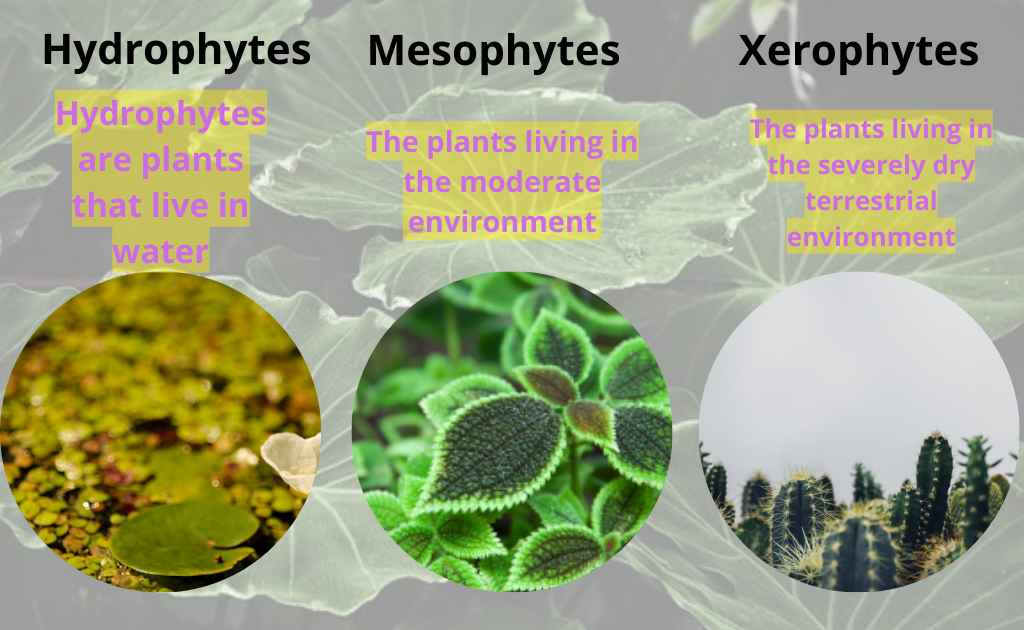
Xerophytes: Adaptations to Dry Environments
Xerophytes are masters of survival in low-water conditions. Their xerophytes characteristics focus entirely on water conservation and efficient resource use.
Key xerophytes characteristics:
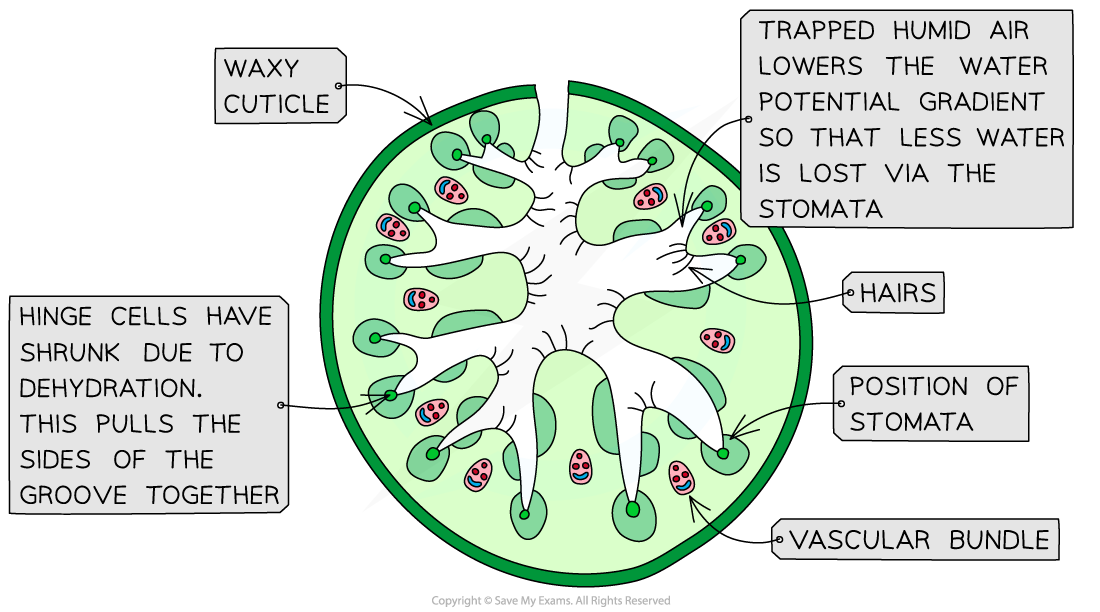
- Extremely thick waxy cuticle to prevent transpiration
- Sunken stomata that reduce water loss
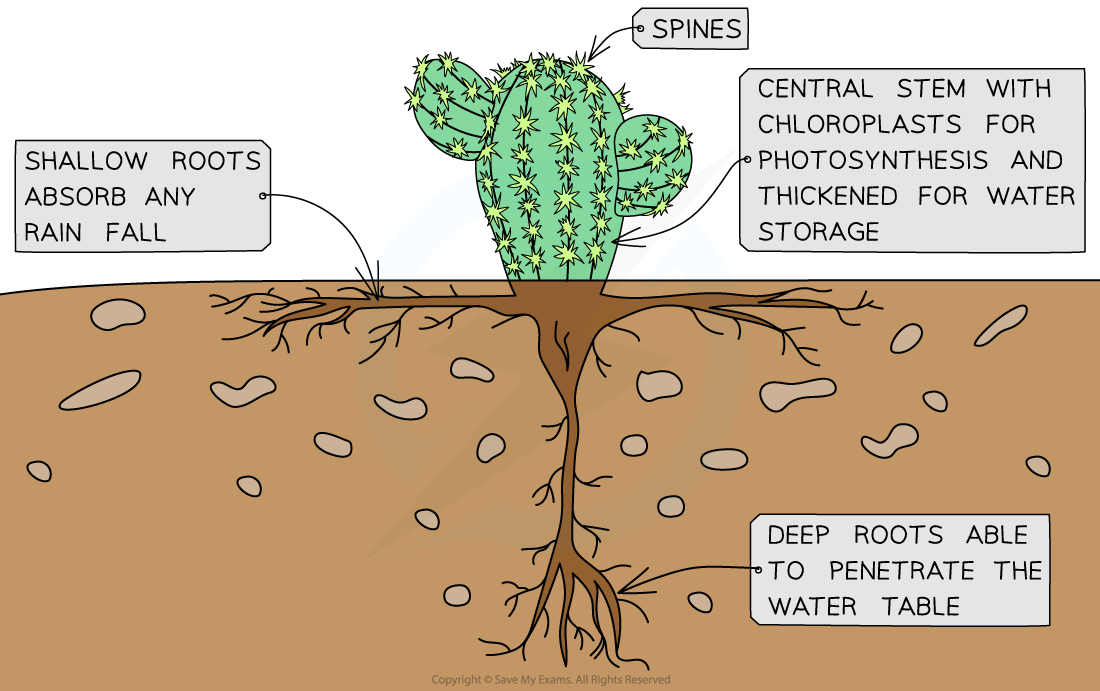
- Highly reduced or spine-like leaves
- Deep taproots or extensive shallow root systems
- Water-storing succulent tissues
- CAM photosynthesis for minimized daytime water loss
Popular examples include cacti, Aloe vera, prickly pear, and Acacia species.
Figure 2: Structural Adaptations of Xerophytes – Thick Cuticle, Sunken Stomata, and Reduced Leaves

Hydrophytes: Adaptations to Aquatic Habitats
Hydrophytes have evolved to thrive in water-rich or fully submerged conditions. Their hydrophytes examples demonstrate adaptations for buoyancy, oxygen transport, and nutrient absorption from water.
Important adaptations:
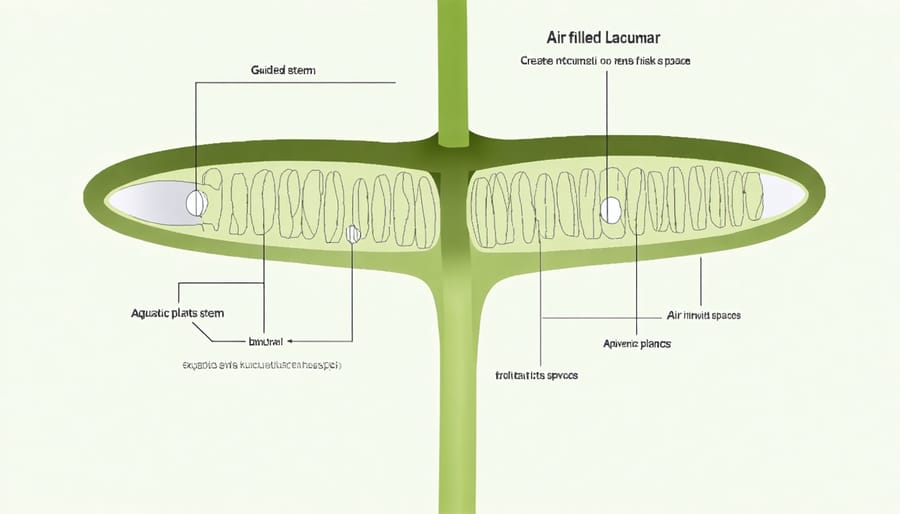
- Large air-filled aerenchyma tissues for oxygen diffusion
- Very thin or absent cuticle
- Floating leaves with stomata only on the upper surface
- Weak, flexible stems
- Adventitious roots
Hydrophytes examples: Lotus, Water Lily, Water Hyacinth, and Hydrilla.
Figure 3: Hydrophyte Plant Structure Showing Floating Leaves and Aerenchyma Tissue
Mesophytes: Plants of Moderate Water Conditions
Mesophytes represent the largest and most familiar group of plants. Mesophytes plants are perfectly suited to environments with moderate and consistent water availability.
Typical features of mesophytes plants:
- Moderate cuticle thickness
- Stomata on both leaf surfaces
- Well-developed vascular system
- Balanced root systems
- Broad leaves optimized for photosynthesis
Common examples: rose, mango, wheat, maize, and most garden plants.
Comparative Table of Xerophytes, Hydrophytes, and Mesophytes
| Feature | Xerophytes | Mesophytes | Hydrophytes |
|---|---|---|---|
| Water Availability | Very low (arid) | Moderate | High / submerged |
| Habitat | Deserts, rocky areas | Forests, grasslands, gardens | Lakes, ponds, wetlands |
| Leaf Structure | Reduced, thick, or spiny | Broad and flat | Floating or finely dissected |
| Cuticle | Very thick | Moderate | Thin or absent |
| Stomata Position | Sunken, often night-opening | Both surfaces, day-opening | Upper surface only |
| Special Tissue | Water storage parenchyma | Standard parenchyma | Aerenchyma (air spaces) |
| Root System | Deep or widespread | Balanced | Reduced or adventitious |
| Examples | Cactus, Aloe, Acacia | Rose, Wheat, Mango | Lotus, Water Lily, Hydrilla |
Figure 4: Comparative Diagram of Xerophytes, Mesophytes, and Hydrophytes Based on Water Habitat

Ecological Importance of Water-Based Adaptations
Plant water adaptation plays a crucial role in maintaining ecosystem balance. Xerophytes stabilize desert soils, hydrophytes improve water quality and support aquatic life, while mesophytes drive agricultural productivity and carbon storage.
As climate change alters rainfall patterns, studying plant distribution and water availability becomes vital for developing resilient crops.
Conclusion
Plant adaptation and distribution in relation to water availability: xerophytes, hydrophytes, and mesophytes explained highlights nature’s incredible diversity and resilience. Whether it’s the drought-defying xerophytes characteristics, beautiful hydrophytes examples, or the reliable mesophytes plants that sustain our daily lives, each group showcases unique plant water adaptation strategies.
Understanding these concepts equips us to better protect biodiversity and adapt agriculture in a changing climate.
Frequently Asked Questions (FAQs)
1. What is the main difference between xerophytes and hydrophytes? Xerophytes conserve water in dry habitats, while hydrophytes live in or on water with features like aerenchyma for oxygen transport.
2. Name some common mesophytes plants found in Pakistan. Mango, wheat, rose, guava, and maize are excellent examples thriving in moderate water conditions.
3. How do xerophytes characteristics help them survive in deserts? Thick cuticles, sunken stomata, reduced leaves, and water-storing tissues minimize water loss.
4. Why are hydrophytes examples important for wetlands? They oxygenate water, filter pollutants, and provide habitat for aquatic organisms.
5. How will climate change affect plant distribution and water availability?
Changing rainfall may expand xerophyte zones while threatening hydrophyte habitats in drying wetlands.


.jpg)





0 Comments