Climate change is reshaping the world around us—and plants are on the front lines. From backyard gardens to vast farmlands and wild forests, rising temperatures, shifting rainfall patterns, and higher carbon dioxide (CO₂) levels are directly influencing how plants grow, reproduce, and survive.
This simple yet detailed guide breaks down the science behind how climate change affects plant growth in easy-to-understand terms. Whether you're a high school student exploring environmental science, a college researcher diving into ecology, or an educator preparing lessons, you'll find clear explanations, real-world examples, mechanisms, and practical insights here. We'll cover both the challenges and any potential benefits, backed by recent studies up to 2025–2026.
Understanding these impacts is crucial: plants form the base of our food chains, produce the oxygen we breathe, and help regulate the climate. Disruptions here ripple into food security, biodiversity, and global ecosystems.
Healthy, thriving plants in optimal conditions—something increasingly rare in a changing climate.
What Is Climate Change and Why Does It Matter for Plants?
Climate change refers to long-term shifts in temperature, precipitation, and weather patterns, primarily driven by human activities like burning fossil fuels, deforestation, and intensive agriculture. These release greenhouse gases (CO₂, methane, nitrous oxide) that trap heat in the atmosphere.
Plants rely on specific environmental cues—temperature, water, sunlight, and CO₂—for photosynthesis (the process of turning light into energy), growth, and reproduction. When these cues change rapidly, plants face stress. Unlike animals, they can't simply move to better conditions, though some species shift their ranges over generations.
Key drivers affecting plant growth include:
- Rising global temperatures (already up ~1.1–1.5°C since pre-industrial times).
- Elevated atmospheric CO₂ (now over 420 ppm, up from ~280 ppm pre-industrial).
- Altered precipitation (more droughts in some areas, floods in others).
- Extreme events (heatwaves, storms, wildfires).
These factors interact in complex ways, often amplifying negative effects.
Rising Temperatures: Heat Stress and Faster (or Slower) Growth
Warmer temperatures speed up some plant processes but often at a cost. Photosynthesis has an optimal temperature range; above it, enzymes like Rubisco (key for carbon fixation) become less efficient, and plants close stomata (leaf pores) to save water, reducing CO₂ intake.
How it affects growth:
- Short-term boost then decline: Mild warming can extend growing seasons in cooler regions, but extreme heat (>30–35°C during key stages like flowering or grain-filling) causes pollen sterility, reduced seed set, and lower yields.
- Yield losses: Each 1°C rise above optimal can cut maize yields by ~7.4%, wheat by ~6%, and rice by ~6.2%. In the U.S. Corn Belt, heatwaves have already caused 25% losses in bad years.
- Respiration vs. photosynthesis: Higher temps increase respiration (energy loss), outpacing photosynthesis and leading to net carbon loss.
For researchers: Models show heat negates much of the CO₂ "fertilization" benefit in staple crops.
Student tip: Think of it like a car engine—too hot, and it overheats and loses efficiency.
Elevated CO₂ Levels: The "Fertilization Effect" and Its Limits
Higher CO₂ acts like extra fertilizer for many plants (especially C3 types like wheat, rice, and soybeans), boosting photosynthesis and water-use efficiency (plants lose less water through stomata).
Potential benefits:
- Faster growth and "global greening" observed via satellites.
- Some crops show 10–20% yield increases in controlled experiments.
But limitations are huge (and often overstated in early models):
- Nutrient constraints: Extra growth requires more nitrogen, phosphorus, and other nutrients. Without them, the boost fades—recent 2026 research shows models overestimate the CO₂ effect by ~11% due to nitrogen shortages.
- Lower nutritional quality: Crops have less protein, zinc, and iron—bad for human and animal diets.
- Temperature interaction: Heat often cancels out CO₂ gains. In maize, rice, and wheat, combined effects lead to net yield declines.
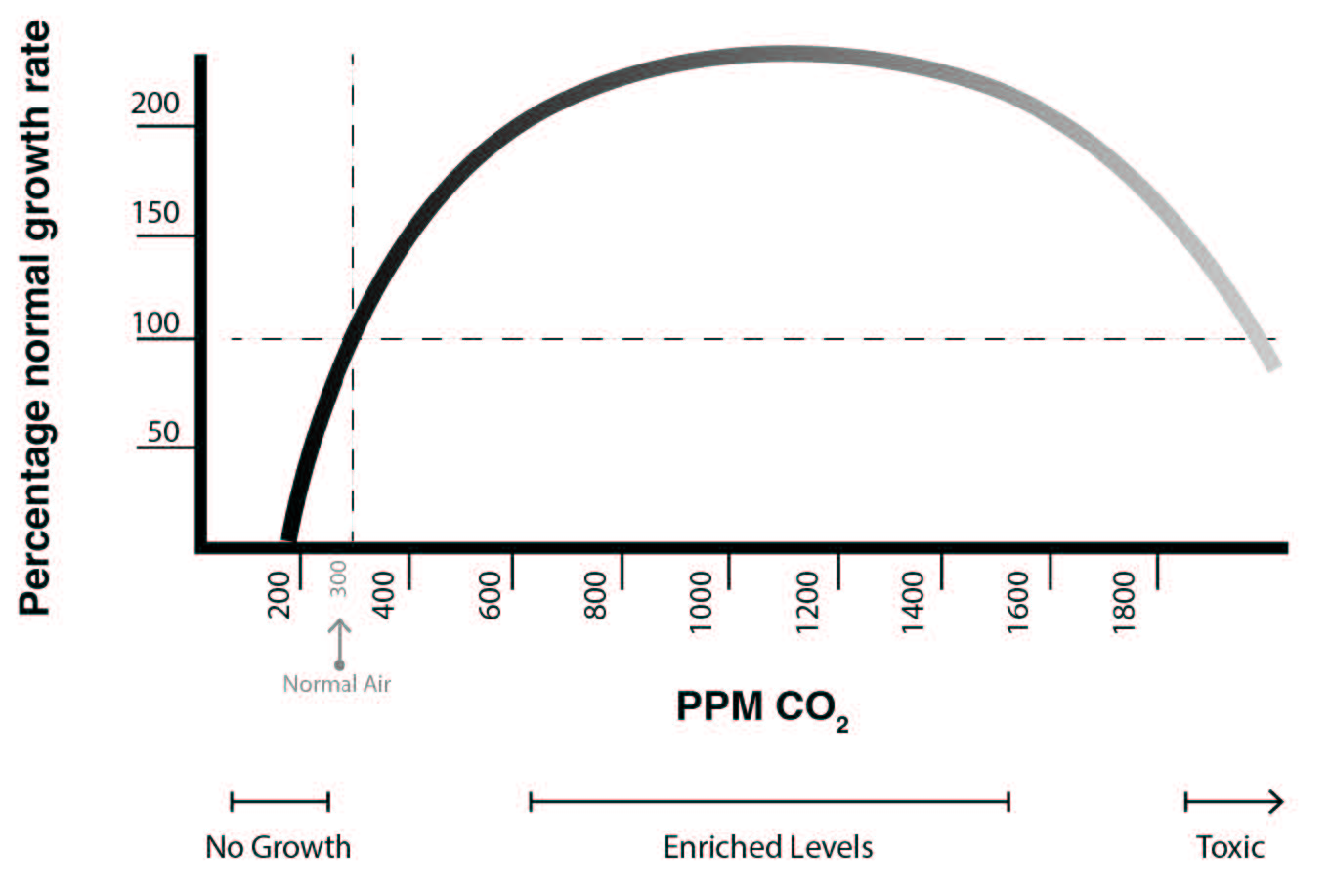
CO₂ enrichment curve: Growth rises initially but plateaus or drops at toxic levels or without other resources.
Real-world data from Free-Air CO₂ Enrichment (FACE) experiments confirm: benefits are modest and short-lived in natural settings.
Changes in Precipitation: Droughts, Floods, and Water Stress
Plants need balanced water. Climate change makes rainfall more erratic:
- Droughts: More frequent and intense. Plants wilt, close stomata, and slow growth. Soil dries faster due to higher evaporation.
- Floods: Waterlogging reduces oxygen to roots, causing rot and nutrient loss.
Impacts on growth:
- Drought sensitivity of photosynthesis and phenology (timing of growth stages) has increased over the last two decades, projected to worsen.
- In arid areas, spring droughts delay leaf-out; in humid ones, they advance it—but overall, productivity drops.

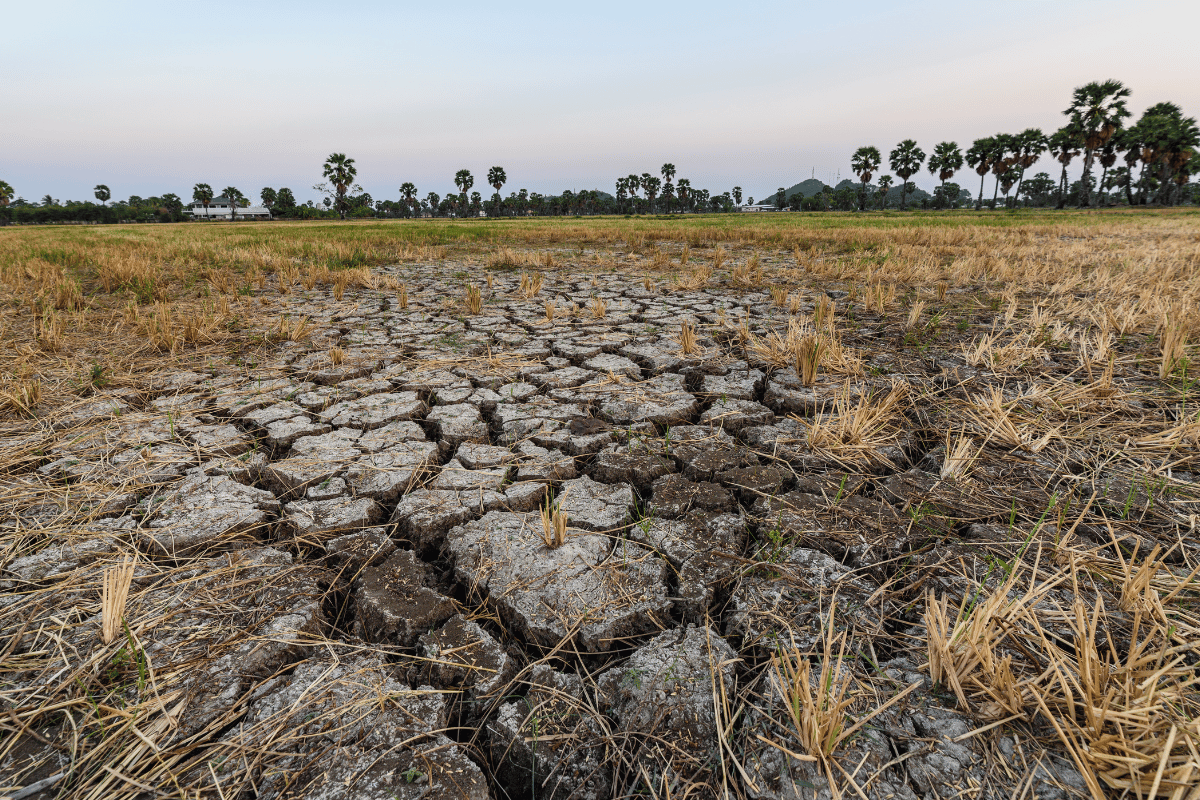
Drought-stressed plants show wilting, yellowing leaves, and stunted growth—common in climate-stressed fields.
Combined heat + drought is especially deadly, amplifying losses in cereals by 11–12%.
Phenological Shifts: Timing Mismatches
Plants "know" when to leaf out, flower, or fruit based on temperature and day length. Warming advances spring events by 1–3+ days per decade—over 3 weeks earlier in some long-term studies.
Problems:
- Pollinator mismatches: Flowers bloom before bees or butterflies emerge.
- Longer growing seasons but higher drought risk (earlier leaf-out uses soil water sooner).
- Ecosystem ripple effects: Earlier senescence (leaf fall) in some species shortens carbon uptake.
For researchers: Phenology models now incorporate warming rates for better predictions over 150+ years.
Indirect Effects: Pests, Diseases, Soil, and Range Shifts
- Pests and pathogens: Warmer winters let insects survive and expand ranges. More generations per year increase damage.
- Soil health: Altered microbial communities; some pathogens thrive in new climates, suppressing growth.
- Species distribution: Plants migrate poleward or uphill—but many can't keep up, leading to biodiversity loss.
Climate change drivers (greenhouse gases, deforestation, agriculture) create feedback loops affecting plants.
Real-World Examples: Crops and Ecosystems
- Maize (corn): Major losses in tropics and U.S.; heat during reproduction aborts kernels.
- Wheat and rice: Declines in Asia/Africa despite some CO₂ benefits; flooding and salinity hurt coastal rice.
- Wild plants: Some evolve quickly to drought, but most face extinction risk.
- Forests: Earlier springs increase drought stress at low elevations.
By 2100, staple crop yields could drop 20–40% without major adaptations.
Positive Impacts? A Balanced View
Some regions see longer seasons and CO₂-driven greening, potentially boosting certain crops (e.g., wheat in cooler areas) or carbon storage short-term. However, recent syntheses show negatives dominate long-term, especially beyond 2°C warming.
Implications for Agriculture, Biodiversity, and Research
- Food security: Billions rely on affected staples; nutritional declines worsen malnutrition.
- Ecosystems: Reduced carbon uptake weakens climate mitigation.
- For students: Start with simple experiments—grow plants under heat/CO₂-simulated conditions.
- For researchers: Focus on breeding resilient varieties, soil microbes, and phenology modeling. Gene editing (e.g., improving Rubisco for heat) shows promise.
Adaptation strategies:
- Drought-resistant crops and precision irrigation.
- Agroforestry and soil health practices.
- Policy: Reduce emissions to limit warming.
Conclusion: Action Starts with Understanding
Climate change is already altering plant growth through heat, CO₂, water stress, and timing shifts—with mostly negative net effects on yields, quality, and ecosystems. But knowledge empowers solutions: from lab research to sustainable farming, we can help plants (and ourselves) adapt.
Students: Observe your local plants and track phenology. Researchers: Prioritize multi-stress experiments and nutrient-CO₂ interactions. Everyone: Support emission reductions and biodiversity protection.
The future of plant growth depends on us. Let's build a resilient green planet.
Further Reading & Keywords for Deeper SEO Exploration:
- "CO2 fertilization limitations 2026"
- "Plant phenology climate change"
- "Drought effects on crop yields"
This guide is optimized for search engines while remaining accessible—share it in classrooms or cite in papers! Questions? Dive into the cited studies for primary data.


0 Comments