
Nature and Units of Light Explained Simply (With Examples & Diagrams)
Have you ever wondered why the sky turns that perfect blue over the Grand Canyon at sunset or why your phone flashlight feels brighter up close but fades fast? Nature and units of light explain exactly that – and it’s way simpler than it sounds. Whether you’re a high school student cramming for physics class or just curious about the world, this guide breaks everything down in plain English. No confusing jargon, just real talk with everyday USA examples, analogies, and easy-to-follow diagrams.
By the end, you’ll understand how light works, why scientists measure it in special units like candela, lumen, and lux, and even how the dual nature of light powers everything from your TV remote to solar panels on rooftops in sunny Arizona. Let’s dive in!
What is Light?
Light is a form of energy that travels in straight lines until something gets in its way. It lets us see colors, shapes, and the faces of our friends and family. Without light, the world would be pitch black – think of walking through a dark movie theater before the film starts.
Imagine light as a super-fast messenger. It zips from the sun to Earth in about eight minutes, covering 93 million miles. That’s faster than any airplane or bullet! In the USA, we rely on light every single day – from the glowing billboards in Times Square to the headlights guiding us down Route 66.
Did you know? A single lightning bolt during a Midwest thunderstorm produces more light energy in a split second than all the streetlights in Chicago combined.
Nature of Light: Wave, Particle, or Both?
Scientists used to argue about what light really is. Some said it’s a wave, like the ripples you make when you skip a stone across a lake in Minnesota. Others said it’s tiny particles shooting out like bullets from a gun. Turns out – they were both right! This is called the dual nature of light.
The Wave Nature of Light
Light travels as an electromagnetic wave. These waves have crests and troughs, just like ocean waves hitting the beach in Florida. The distance between two crests is called the wavelength. Different wavelengths create different colors:
- Red has long waves (think of a stoplight).
- Blue and violet have short waves (like the clear sky over the Rocky Mountains).
When light waves hit a prism (or raindrops), they bend and split into a rainbow – that’s exactly what happens during a summer storm in the Midwest.
Analogy time: Picture light waves like the sound waves from your favorite country concert at the Grand Ole Opry. The waves spread out and can bend around corners a little bit.
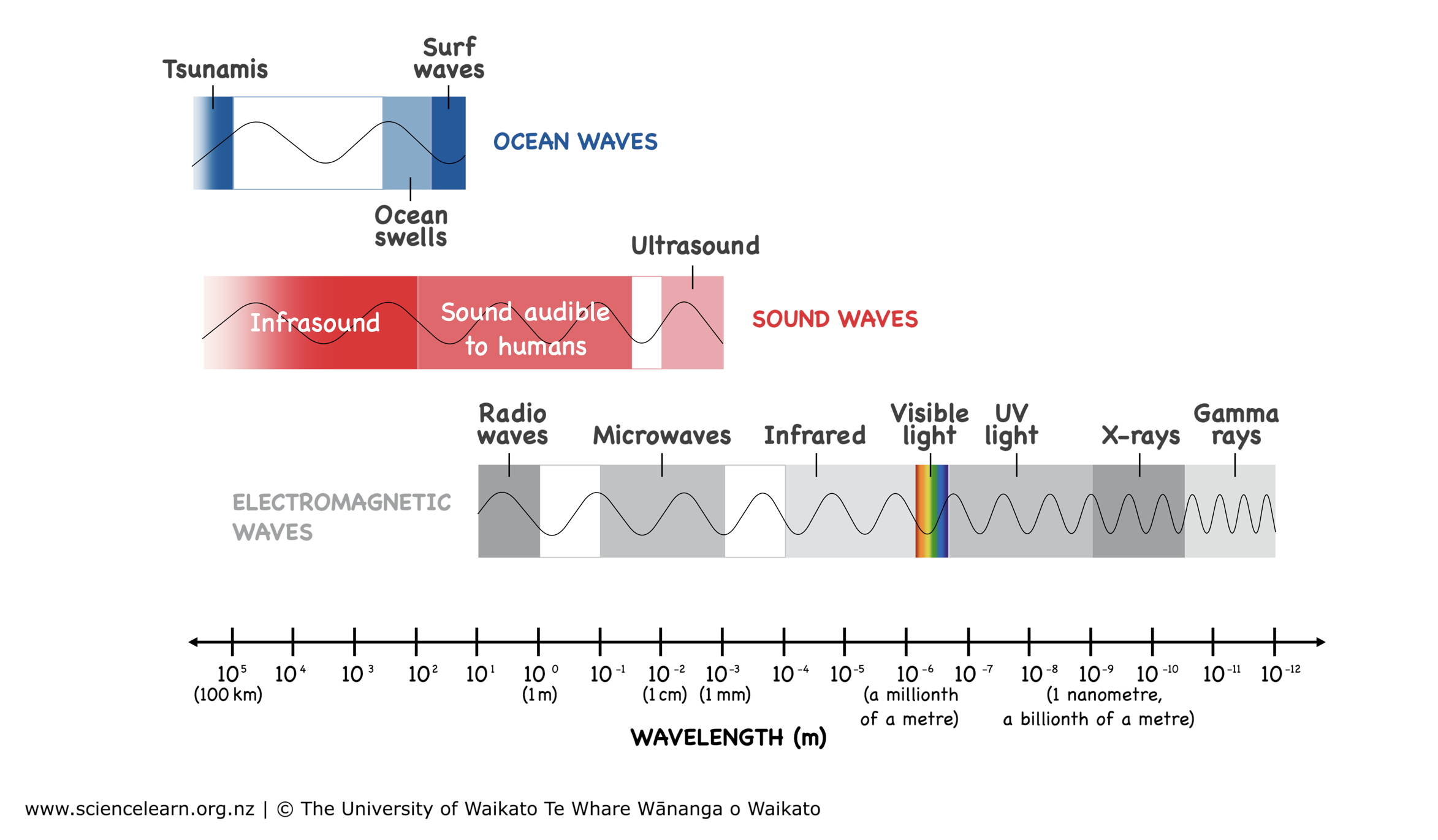
Diagram: Wave Nature of Light (above) – Clear view of wavelengths, crest, trough, and how red vs. blue/violet light differs. Perfect for understanding colors!
The Particle Nature of Light
Light also acts like tiny packets of energy called photons. These photons are like invisible baseballs zooming at the speed of light. When photons hit your eye, your brain says, “Hey, that’s a red apple!”
Photons explain why light can knock electrons out of metal – that’s how solar panels work.
Rhetorical question: Ever noticed how your solar-powered garden lights in the backyard only turn on after the sun sets? That’s photons at work!
The Dual Nature of Light
The dual nature of light means light switches between wave and particle behavior depending on the situation. In everyday life, it usually acts like a wave. But when it interacts with tiny things (like electrons in your phone’s camera), it behaves like particles.
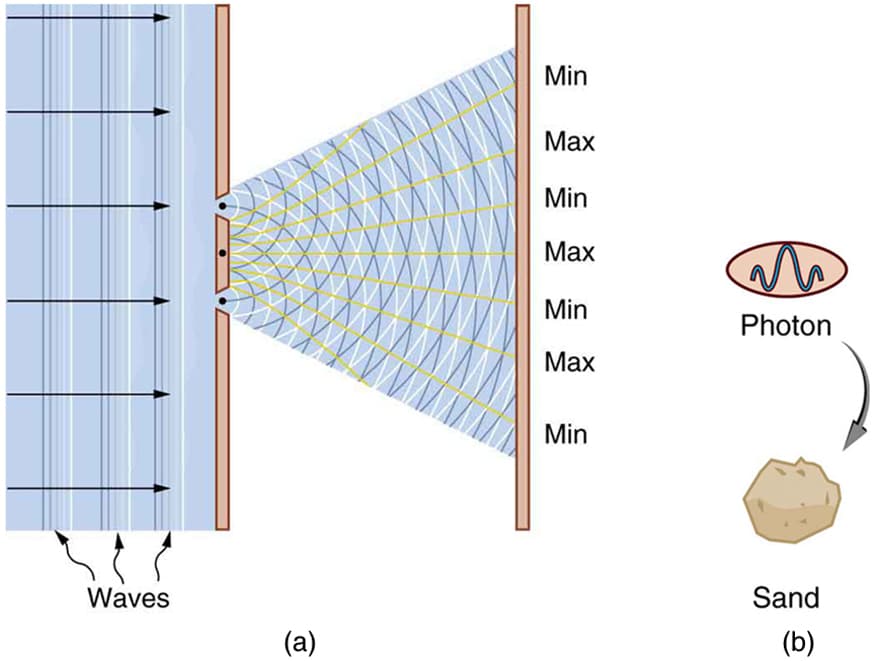
Diagram: Dual Nature of Light (above) – Shows both wave behavior and photon packets side-by-side with real examples.
Did you know? The dual nature of light earned Albert Einstein a Nobel Prize – the same guy whose equations power GPS in your car as you drive across the USA!
Units of Light: How We Measure Brightness
Now that we know what light is, let’s talk about how much light there is. Scientists use special light intensity units so we can compare a dim candle to a blazing stadium light. The main SI unit of light is the candela.
Here’s a simple table to make it crystal clear:
| Unit | What It Measures | Symbol | Everyday USA Example | Fun Fact |
|---|---|---|---|---|
| Candela | Luminous intensity (brightness in one direction) | cd | The brightness of one standard candle | 1 candela is roughly the light from a single candle flame |
| Lumen | Total light output (luminous flux) | lm | How much light a flashlight gives off | A typical smartphone flashlight puts out about 50–100 lumens |
| Lux | Light falling on a surface (illuminance) | lx | Brightness on your desk or a sports field | A sunny day in Miami can hit 100,000 lux; a classroom needs 300–500 lux |
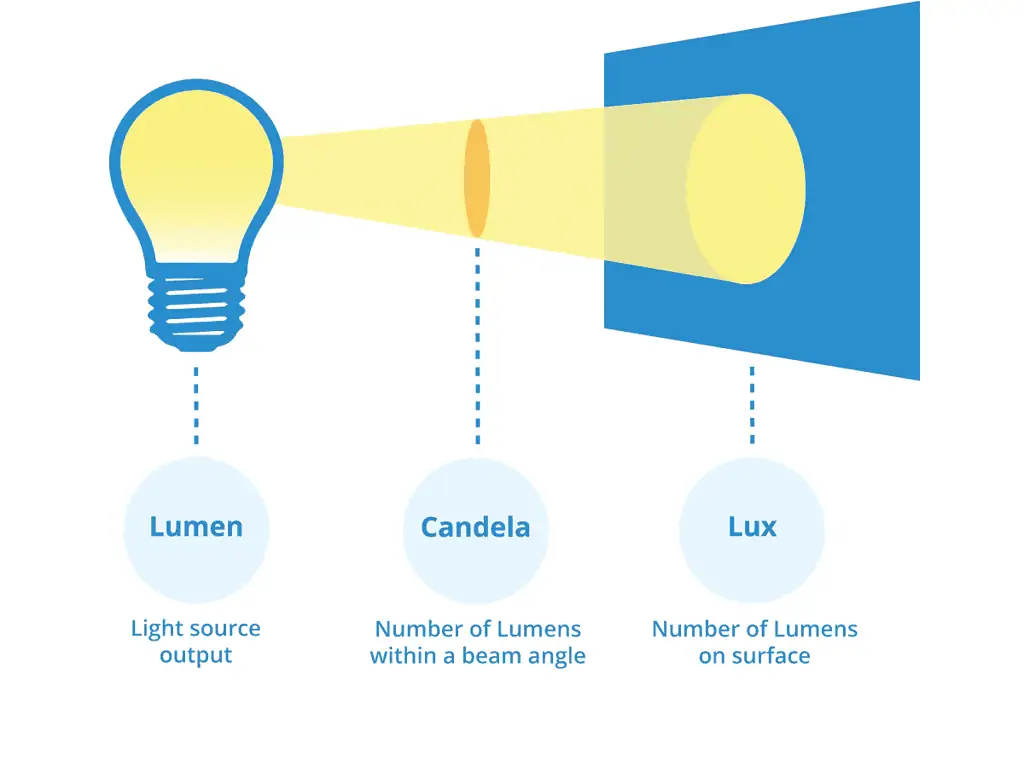
Diagram: Candela vs Lumen vs Lux (above) – Super clear visual showing how each unit works with a light bulb example.
Quick tip: Next time you buy light bulbs at Walmart, check the lumens on the package instead of just watts. More lumens = brighter room!
Real-Life Examples of Light in the USA
Let’s make this super relatable with stories from everyday American life.
Picture this: You’re at a Friday night high school football game in Texas. The giant stadium lights overhead pump out thousands of lumens so players can see the ball. Each light might be 1,000 candela strong, and the field gets measured in lux to make sure it’s safe.
Or think about your bedroom at night. That small LED nightlight? It might give off just 10 lumens and create only 5 lux on your pillow.
Storytime: During a road trip through the Grand Canyon, the setting sun’s light intensity drops from 100,000 lux to just a few hundred in minutes. That’s why photographers chase “golden hour” light.
Did you know? The Statue of Liberty’s torch in New York Harbor was designed with special lenses to throw light using high candela values so ships could see it from miles away!
FAQs About Nature and Units of Light
What is the SI unit of light? The official SI unit of light intensity is the candela (cd). It measures how bright a light appears in a specific direction.
What is the dual nature of light? The dual nature of light means light behaves as both a wave (like ripples) and a particle (photons) at the same time.
What’s the difference between lumen and lux? Lumen measures total light output from a source. Lux measures how much of that light actually lands on a surface.
Why do we need different light intensity units? Different units help us design everything from phone screens to streetlights.
Can light be measured in watts? Watts measure electrical power, not light itself. That’s why we use candela, lumen, and lux for actual brightness.


.jpg)





0 Comments