
In the comprehensive guide to the best AI tools 2026, AI agents have emerged as the most significant evolution yet. They move far beyond the reactive capabilities of tools like ChatGPT, Claude, and Gemini to become proactive, goal-oriented “digital teammates” that plan, execute, and iterate on complex multi-step workflows with minimal human oversight.
As of April 2026, agentic AI is no longer experimental. Over 62% of mid-to-large enterprises have at least one production-grade AI agent running, according to recent industry benchmarks. These systems are delivering 40-70% time savings on repetitive and knowledge-intensive tasks, reshaping jobs, scaling businesses, and personalizing education at unprecedented levels.
Below is a deeper, more detailed exploration—including architecture breakdowns, real-world examples, ROI insights, getting-started guidance, and a full FAQ section.
What Are AI Agents? (And How They Differ from LLMs)
Large Language Models (LLMs) are powerful at generating text, summarizing, or answering questions—but they stop once the output is delivered. They require constant human prompting and lack persistence or action-taking ability.
AI agents are autonomous systems built on top of LLMs. They add:
- Goal-oriented planning (breaking objectives into actionable steps)
- Tool integration (web search, APIs, code execution, databases, email, calendars)
- Memory layers (short-term conversation context + long-term vector databases for learning from past interactions)
- Reasoning loops (self-reflection and course-correction)
- Autonomy (they keep working until the goal is met or they need human input)
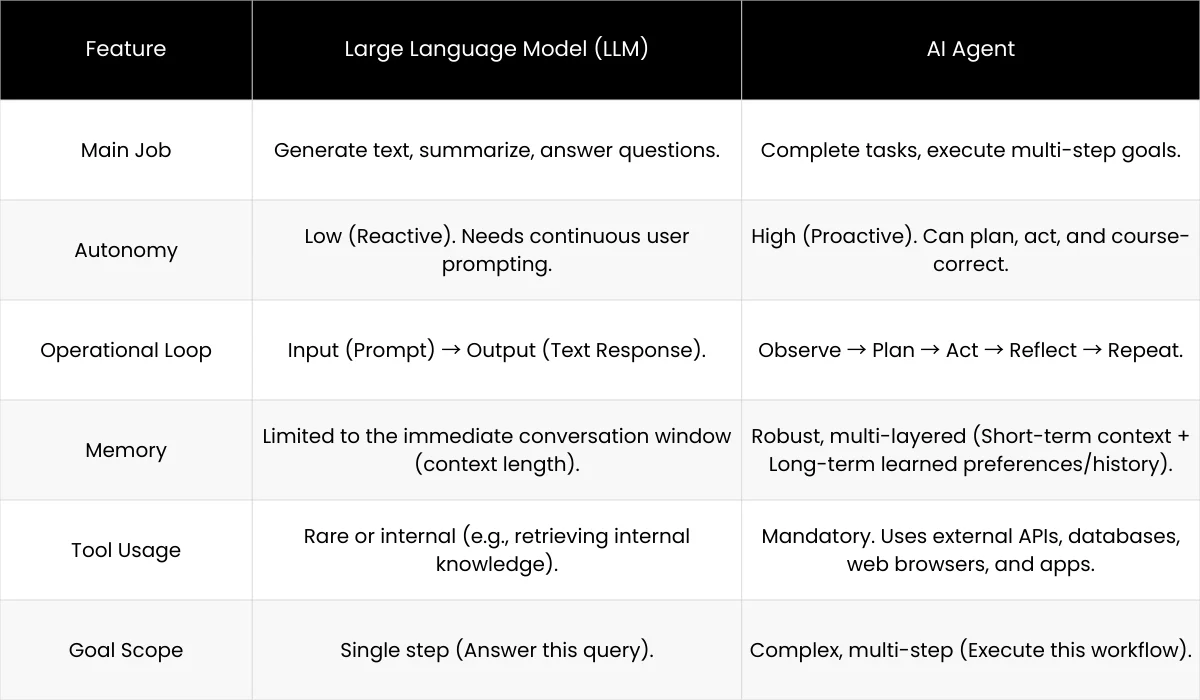
In practice, an LLM might write a marketing email. An AI agent would research your target audience, draft the email, A/B test subject lines via analytics tools, schedule the send, and analyze open rates afterward—all autonomously.
How AI Agents Work: Core Architecture in 2026
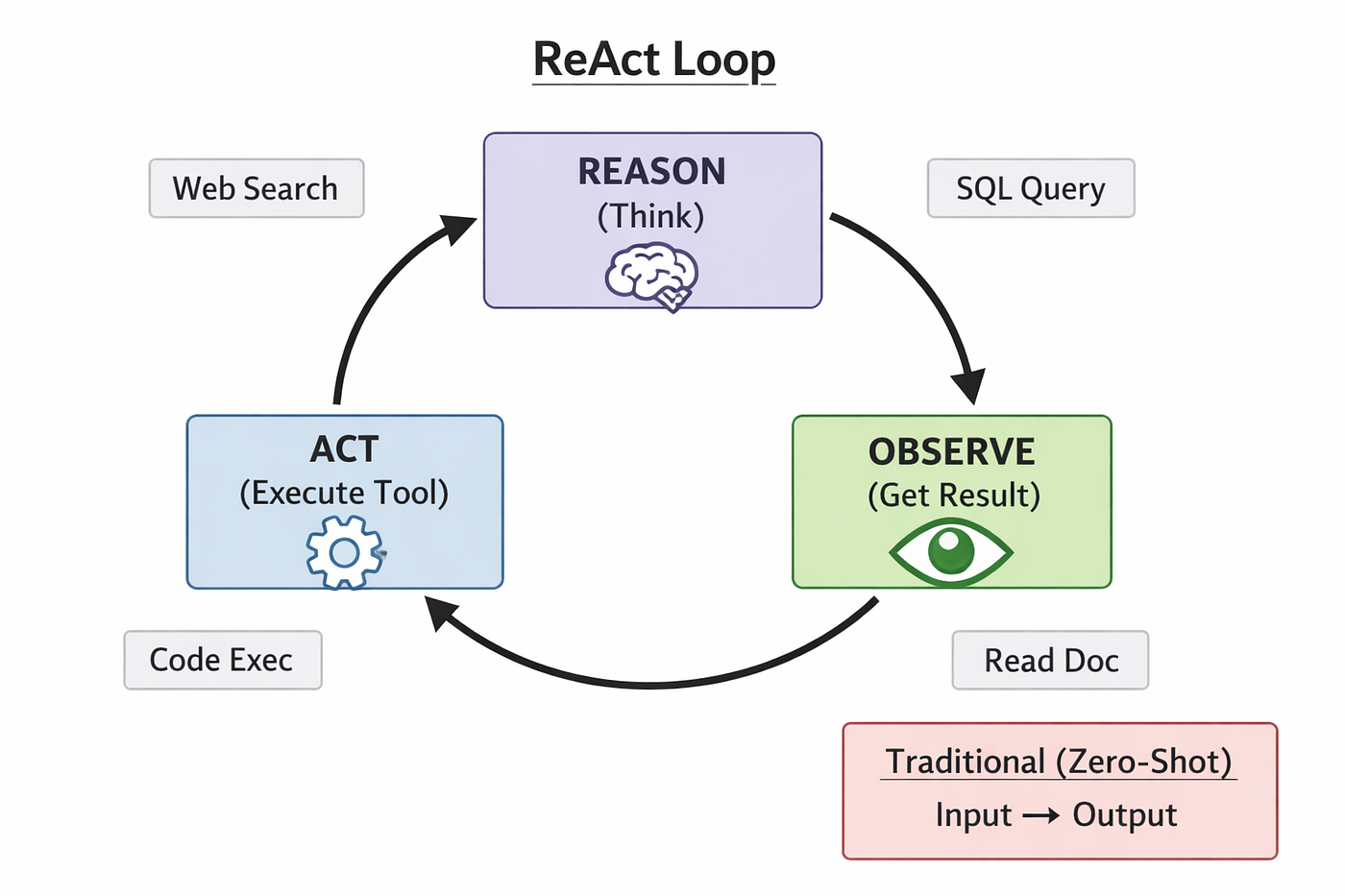
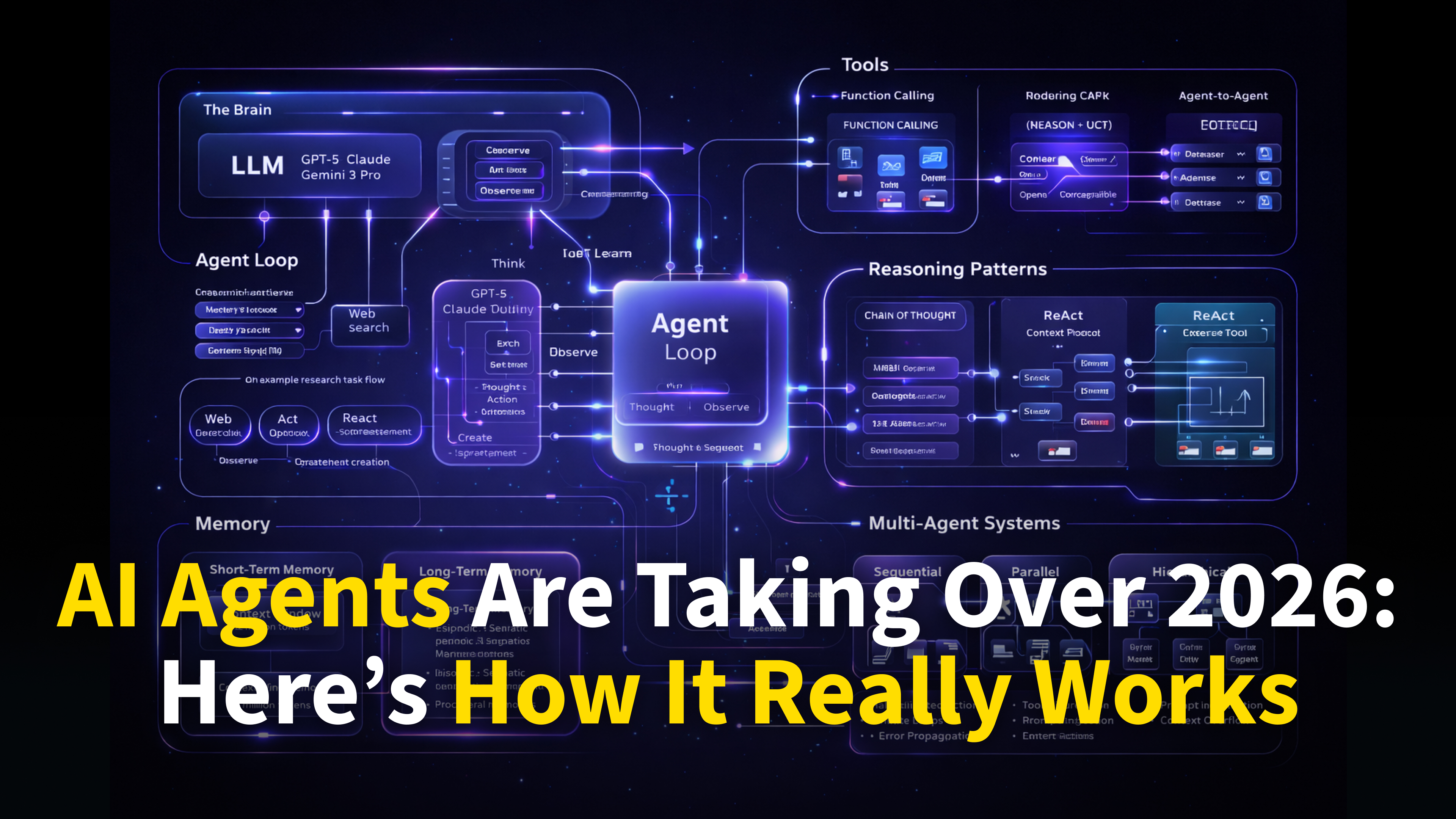
Most production agents follow the ReAct (Reason + Act) framework or its advanced variants (Plan-and-Execute, Reflexion, etc.):
- Observe — Pull data from tools, user input, or environment.
- Reason/Plan — Use Chain-of-Thought or Tree-of-Thought reasoning to create a step-by-step plan.
- Act — Call external tools or APIs (e.g., search the web, query a database, generate code, send an email).
- Reflect — Evaluate results against the goal, identify gaps, and loop back if needed.
Additional advanced components in 2026 include:
- Multi-layered memory (episodic for specific tasks, semantic for knowledge, procedural for workflows)
- Tool calling via standardized protocols (MCP — Model Context Protocol)
- Human-in-the-loop (HITL) safeguards for high-stakes decisions
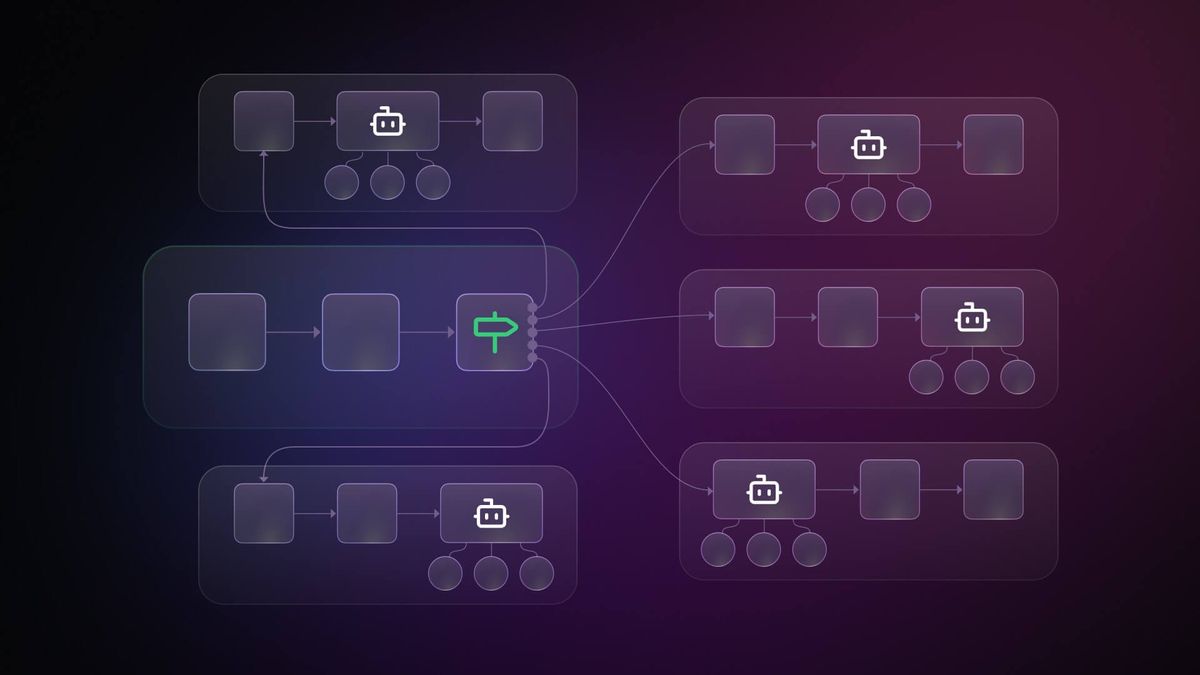
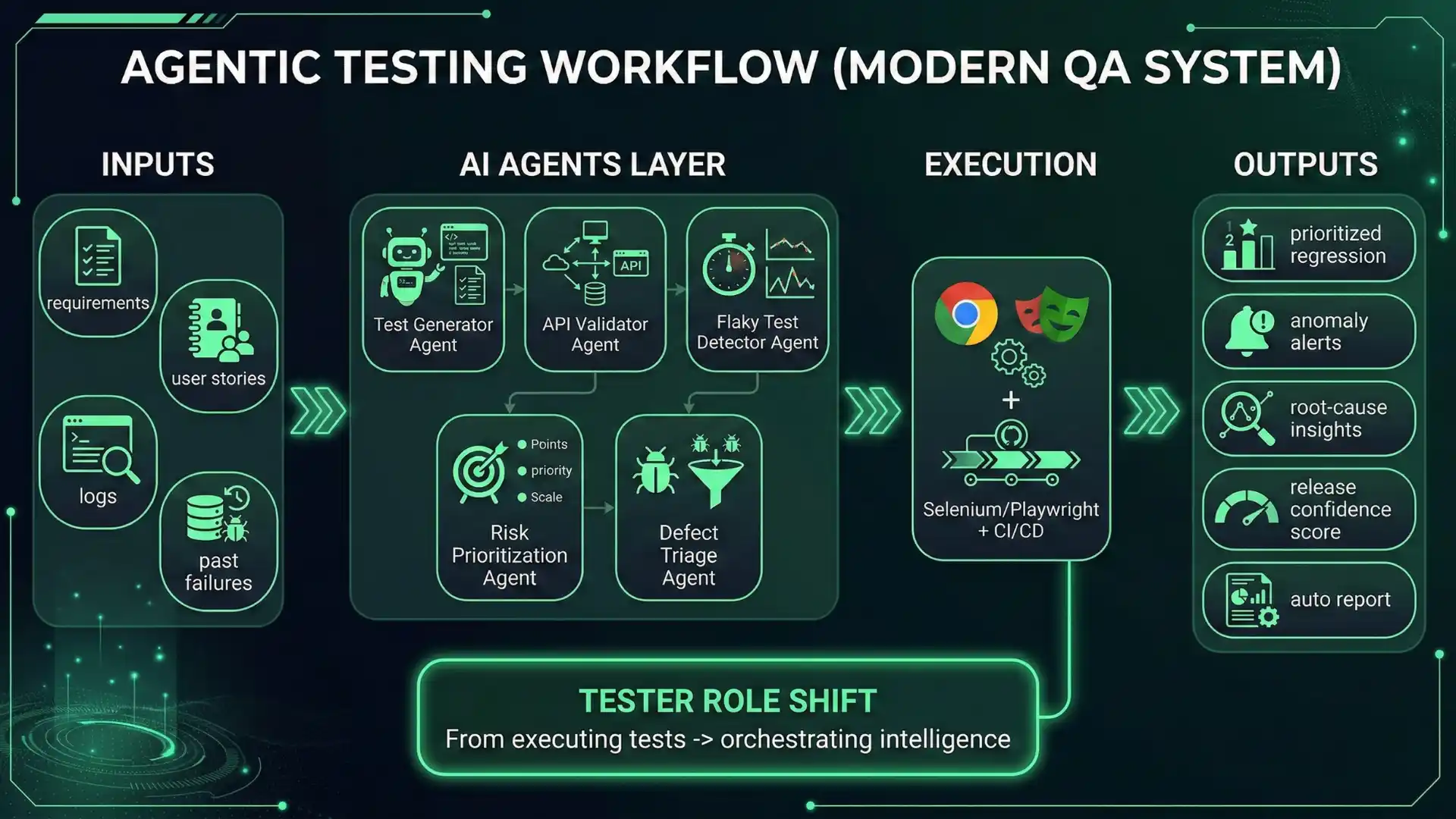
- Multi-agent orchestration where specialized agents collaborate
Types of AI Agents and the Rise of Multi-Agent Systems (MAS)
- Single-purpose agents — Handle one focused workflow (e.g., “research competitor pricing and generate a report”).
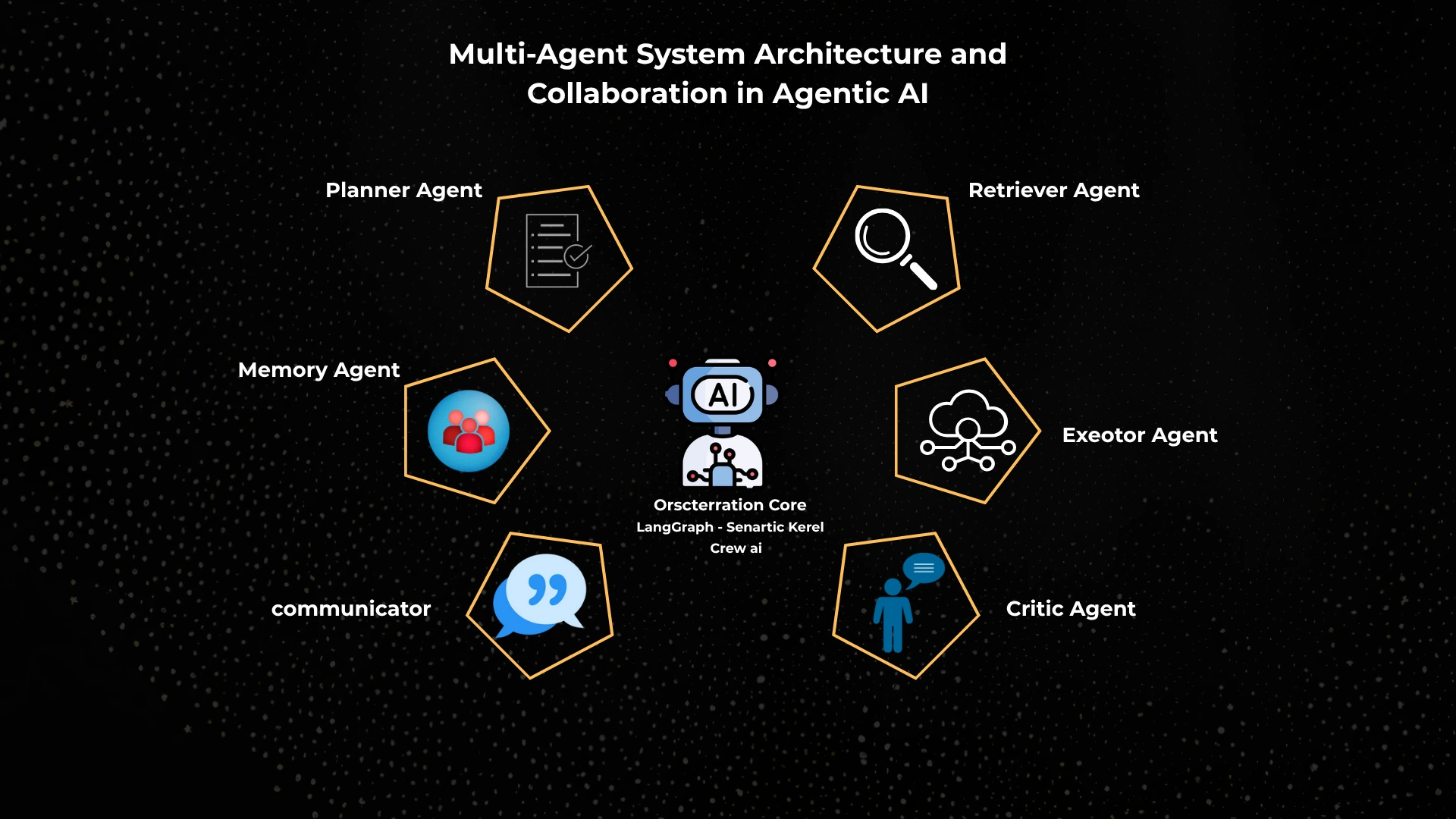
- Multi-Agent Systems (MAS) — The dominant 2026 trend. These are teams of specialized agents (Planner, Researcher, Executor, Critic, Orchestrator) that collaborate like a human team. MAS improves accuracy by 25-40% on complex tasks and scales effortlessly.
Top AI Agent Frameworks and Platforms in 2026 (with Direct Links)
Production-Ready Leaders:
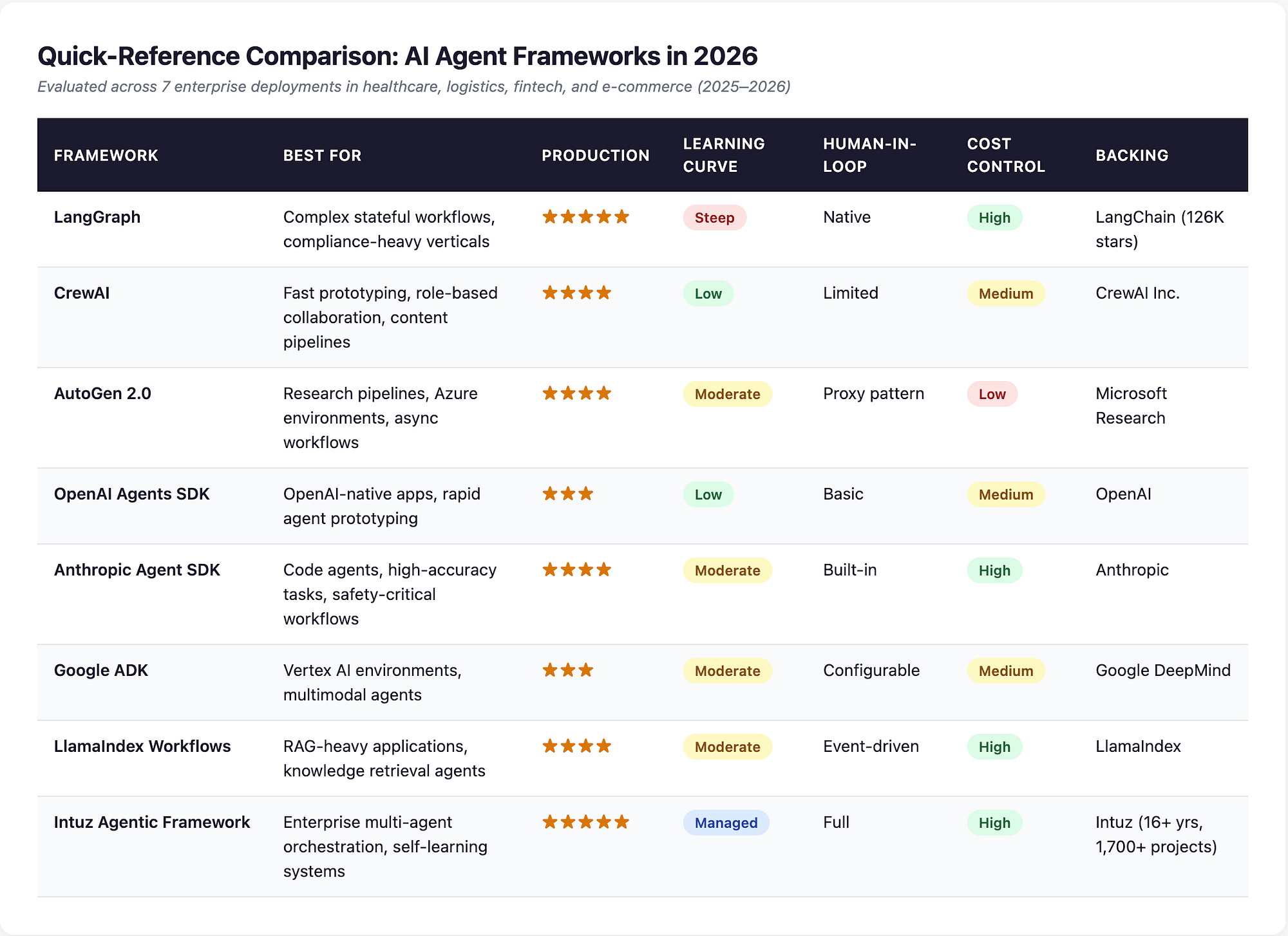
- LangGraph — Most robust for stateful, controllable, enterprise-grade workflows with excellent human-in-the-loop support.
- CrewAI — Fastest for building role-based multi-agent teams; perfect for marketing, research, and content pipelines.
- AutoGen (Microsoft) — Best for conversational multi-agent systems and seamless Azure integration.
- OpenAI Agents SDK, Anthropic Agent SDK, Google ADK.
No-code options: Zapier Agents, Lindy, n8n, FlowHunt.
Real-World Impact: Changing Jobs, Business & Education
Jobs & Productivity Agents automate 30-50% of repetitive knowledge work. Developers using agentic tools (e.g., integrated with Cursor) complete tasks 55% faster. New roles emerge in “agent orchestration” and prompt/system design.
Business
- Marketing teams run full campaign agents (research → content → distribution → analysis).
- Operations use agents for supply-chain forecasting, invoice processing, and compliance checks.
- ROI examples: Companies report 40%+ reduction in administrative costs and 3-5x faster project delivery.
Education Personalized learning agents adapt lessons in real time, remember student strengths/weaknesses, and act as 24/7 tutors—building on tools like Google NotebookLM.

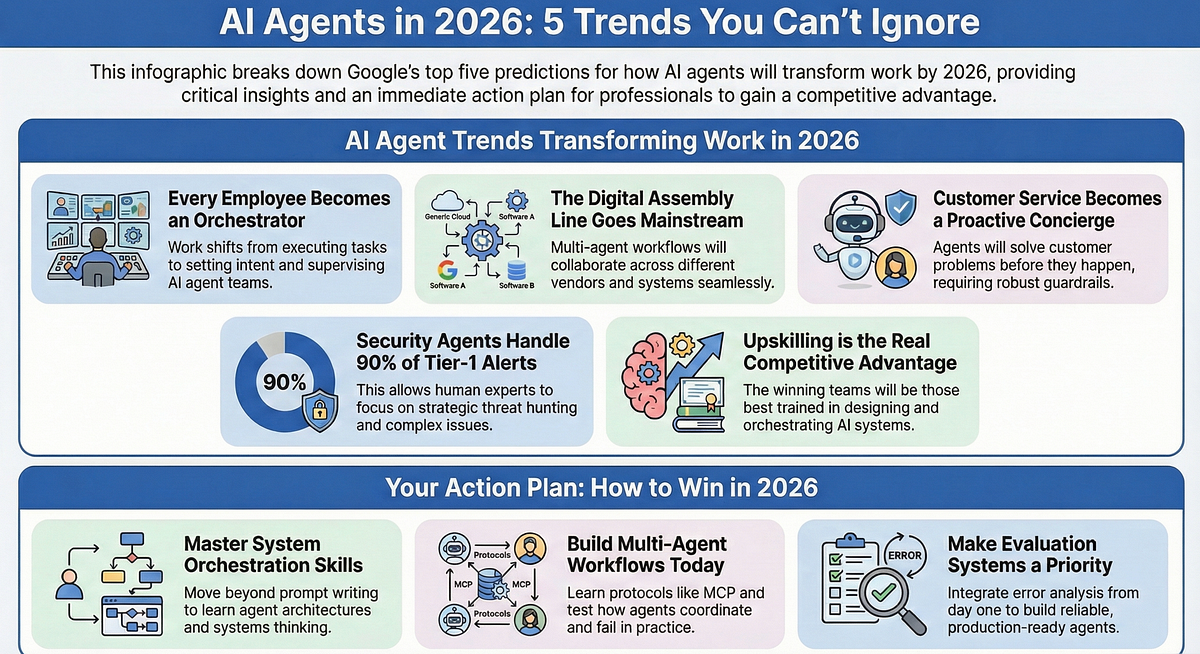
Top AI Agent Trends Transforming Work in 2026
The Future of AI Agents (Late 2026 and Beyond)
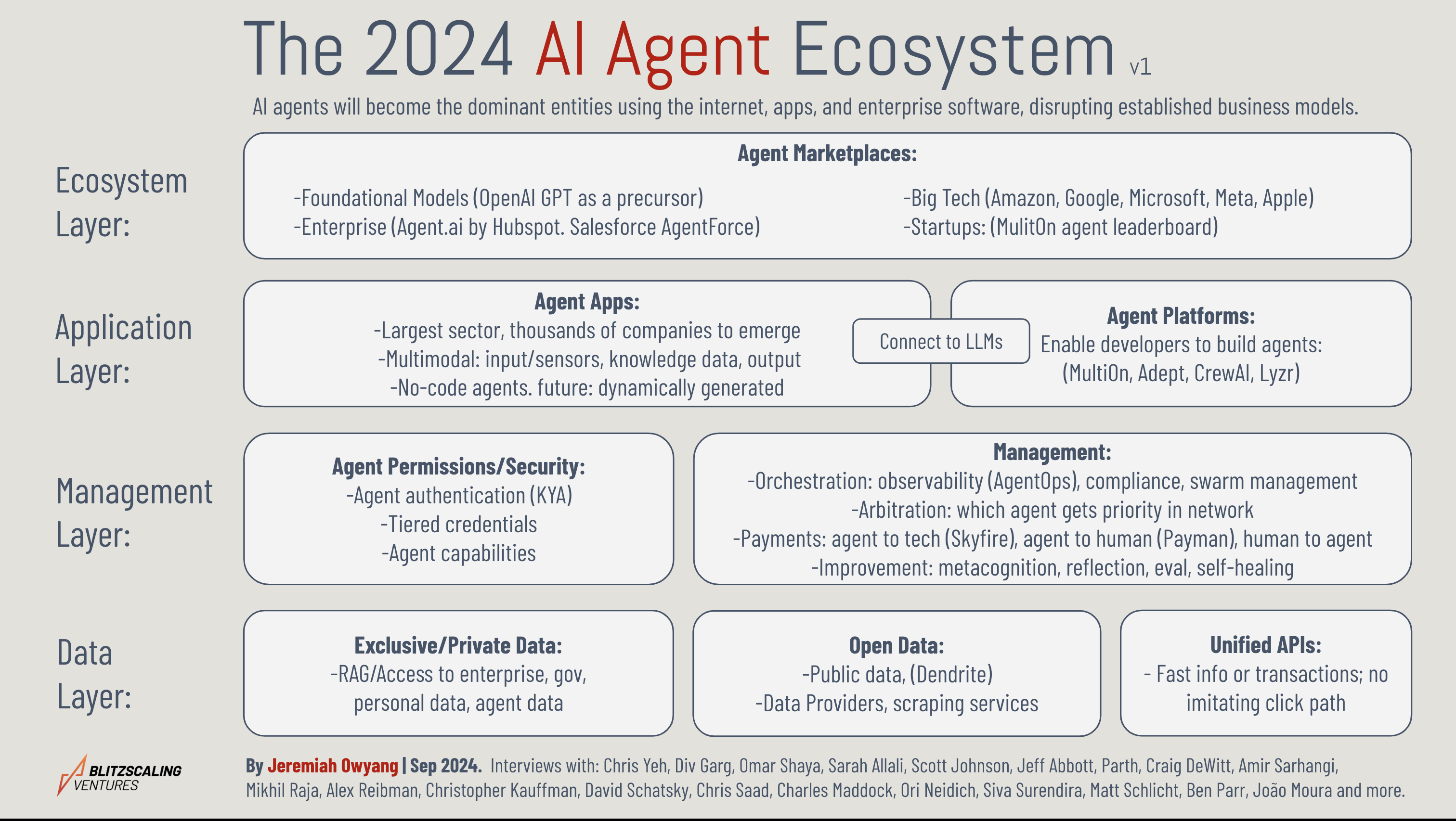
Expect agent marketplaces, self-improving systems, standardized inter-agent communication protocols, and deeper integration with physical robots. By 2027, “agentic enterprises” could see multi-agent teams handling 15-25% of daily operations.

How to Get Started with AI Agents Today
- Choose a framework (CrewAI for speed, LangGraph for control).
- Start small: Build a simple research + report agent.
- Always include human oversight initially.
- Integrate with your existing best AI tools 2026 stack (Claude for reasoning, Gemini for multimodal, Zapier for connections).
FAQ: AI Agents in 2026
What exactly is an AI agent in 2026? An AI agent is an autonomous system that uses an LLM as its brain but adds planning, memory, tool usage, and reasoning loops to complete complex, multi-step goals without constant human prompting.
How do AI agents differ from tools like ChatGPT or Claude? ChatGPT and Claude are reactive LLMs that generate one response at a time. Agents are proactive—they plan, use tools, remember past actions, and iterate until the full objective is achieved.
What are the best AI agent frameworks in 2026? LangGraph (most robust for production), CrewAI (fastest for teams), and AutoGen (great for conversational workflows) lead the pack. Start with CrewAI if you’re new.
Are AI agents safe and secure for business use? Yes, when built with guardrails, human-in-the-loop approval, and enterprise frameworks like LangGraph. Always use permission controls and audit logs for sensitive data.
How much do AI agents cost to run in 2026? Free tiers exist for experimentation. Production use typically costs $20–200/month per agent depending on usage and model (Claude 3.5 or GPT-4o class). Heavy enterprise deployments can reach thousands but deliver strong ROI through time savings.
Can students or individuals use AI agents effectively? Absolutely. Personal agents can summarize lectures, create study plans, draft essays with citations, or manage research projects—perfect for enhancing tools like Perplexity or NotebookLM.
What’s the future of AI agents beyond 2026? By 2027–2028, expect fully autonomous agent swarms, agent marketplaces, self-improving systems, and seamless human-AI collaboration where agents handle the majority of routine work while humans focus on strategy and creativity.
Ready to dive in? Pick one framework, combine it with the top models from our best AI tools 2026 list, and start building. The agent era is here—those who master it first will have a massive competitive edge.


.jpg)





0 Comments