🐾 Population Interactions
Intraspecific Interactions: Colonization, Aggregation, Altruism, Communication & Cannibalism
Introduction: Why individuals interact
No organism lives in complete isolation. Even solitary animals must find mates, avoid predators, defend space, or compete for food. Plants may compete for light, water, and nutrients, while animals may live in family groups, herds, flocks, colonies, or territories.
The relationships among organisms are called population interactions. When these relationships occur between individuals of the same species, they are called intraspecific interactions. When they occur between individuals of different species, they are called interspecific interactions.
Intraspecific interactions are especially important because individuals of the same species often need the same resources. They may compete for food, water, space, light, mates, or shelter. At the same time, they may cooperate, live in groups, warn one another of danger, or help relatives survive.
1. Colonization
What is colonization?
Colonization is the successful establishment of individuals of a species in a new habitat or area where they were previously absent or rare. It usually begins when individuals disperse from an existing population and reach a suitable new location.
Colonization can expand the geographical range of a species, allow populations to recover after disturbance, and introduce genetic diversity into isolated habitats.
How colonization occurs
Colonization is not a single event. It is a process involving several stages:
- Dispersal: Individuals leave their original population and move into new areas. Seeds may be carried by wind, water, or animals; young animals may leave their parents’ territory.
- Arrival: Dispersing individuals reach a new habitat. Many do not survive this stage because they may arrive in unsuitable conditions.
- Establishment: Individuals must survive, obtain resources, and begin growth or reproduction.
- Reproduction: Successful colonists produce offspring in the new area.
- Population growth and spread: If conditions remain favorable, the new population increases and may spread further.
Factors affecting colonization
Dispersal ability
Species with lightweight seeds, winged young, strong swimming ability, or long-distance movement can colonize new areas more easily.
Habitat suitability
A new area must provide suitable temperature, moisture, soil, light, shelter, food, and space.
Disturbance
Fires, floods, landslides, and human activities can create open spaces where colonizing species may establish.
Competition and predation
Colonists may fail if existing species strongly compete with them or if predators, herbivores, or diseases are present.
Plant colonization example
After a landslide or fire, bare ground may become available. Wind-dispersed seeds may arrive first. If moisture and nutrients are sufficient, the seeds germinate and establish seedlings. Over time, these plants may reproduce and form a new local population.
Colonization is risky
Most dispersing individuals do not become successful colonists. A seed may land on rock, a young animal may fail to find food, or a new habitat may contain predators or unsuitable conditions. Successful colonization requires survival, growth, and reproduction.
2. Aggregation
What is aggregation?
Aggregation is the coming together of individuals of the same species into groups. These groups may be temporary, such as animals gathering at a water source, or permanent, such as social insects living in colonies.
Aggregation may occur because resources are unevenly distributed, because individuals are attracted to one another, or because group living provides survival advantages.
Reasons for aggregation
Protection from predators
Group members may detect predators more quickly. A predator may also be confused by many moving individuals, making it harder to target one animal.
Efficient use of resources
Groups can locate food more effectively. Some animals share information about food sources or cooperate during feeding.
Mating opportunities
Aggregation brings potential mates together. This is especially important for species that occur at low density or reproduce during a short season.
Temperature regulation
Some animals huddle together to conserve heat in cold environments. Grouping can reduce heat loss and improve survival.
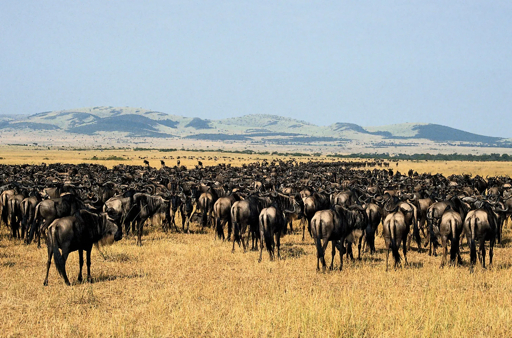
Benefits of aggregation
- Improved defense: Many individuals can detect and respond to danger more effectively than a solitary individual.
- Increased mating success: Individuals are more likely to encounter suitable mates.
- Cooperative behavior: Group members may cooperate in feeding, defense, or caring for young.
- Better environmental tolerance: Huddling or clustering can reduce heat loss or protect individuals from wind and drying.
Costs of aggregation
Aggregation is not always beneficial. When many individuals occupy the same area, competition for food, water, space, mates, or light may increase. Dense groups can also make it easier for diseases, parasites, and pests to spread. In plants, crowded seedlings may shade one another and compete for nutrients and water.
Aggregation and population regulation
At low density, aggregation may help individuals survive and reproduce. At high density, the costs of crowding may become greater than the benefits, slowing population growth or causing individuals to disperse.
3. Altruism
What is altruism?
Altruism is a behavior in which an individual reduces its own direct fitness or survival chances while increasing the fitness of another individual.
For example, an animal may give an alarm call that warns relatives of danger but also attracts attention to itself. A worker insect may help raise the young of a queen instead of producing its own offspring. Such behaviors can still evolve when they increase the survival or reproduction of genetic relatives.
Direct and indirect fitness
Direct fitness is the reproductive success an individual achieves by producing its own offspring. Indirect fitness is the reproductive success gained by helping relatives produce more offspring.
The combination of direct and indirect fitness is called inclusive fitness. An altruistic act can increase inclusive fitness if the benefit to relatives is large enough to balance the cost to the helper.
Hamilton’s rule: a simple explanation
Altruism is favored when: relatedness × benefit to recipient > cost to helperIn symbols, this is often written as rb > c.
- r = genetic relatedness between helper and recipient
- b = benefit gained by the recipient
- c = cost paid by the helper
For example, helping a full sibling may be favored if the benefit to the sibling is more than twice the cost to the helper, because full siblings share, on average, half of their genes.
Forms of altruistic behavior
Alarm calling
An individual warns relatives of an approaching predator. The caller may face greater risk, but nearby relatives gain time to escape.
Cooperative breeding
Non-breeding individuals help parents raise young. This occurs in some birds, mammals, and social insects.
Food sharing
An individual may share food with relatives or group members, especially when food is abundant for the donor but scarce for the recipient.
Self-sacrifice
In some social insects, workers defend the colony even when defense may lead to their death. This can benefit the queen and related colony members.
Cooperative breeding example
In some cooperative breeders, older offspring remain with their parents and help feed or protect younger siblings. Although these helpers may not reproduce themselves, they improve the survival of relatives who carry many of the same genes.
Altruism is not always toward relatives
Sometimes unrelated individuals help one another because both may receive a future benefit. This is called reciprocal altruism. One individual helps another, and the favor may be returned later. Such behavior is more likely when individuals meet repeatedly and can recognize one another.
4. Communication
What is communication?
Communication is the transfer of information from one individual to another through signals. In intraspecific communication, both the sender and receiver belong to the same species.
Communication allows individuals to coordinate activities, avoid danger, find mates, establish territories, recognize relatives, and maintain social relationships.
Main types of communication signals
| Type of signal | Examples | Main uses | Possible limitation |
|---|---|---|---|
| Visual | Bright colors, body posture, movements, displays | Mate attraction, warning, dominance, group movement | Less effective in darkness or dense vegetation |
| Acoustic | Songs, calls, vibrations, drumming | Mate attraction, alarm calls, coordination | May attract predators or competitors |
| Chemical | Pheromones, scent marks, plant volatile signals | Mate attraction, territory marking, alarm, recognition | Can be affected by wind, temperature, and distance |
| Tactile | Touching, grooming, antennal contact | Social bonding, recognition, cooperation | Works only at very close range |
Functions of communication
- Mate attraction: Many animals use calls, colors, scents, or displays to attract mates.
- Warning: Alarm calls or chemical signals can warn group members of predators.
- Territory defense: Scent marks, songs, or displays can signal ownership of an area.
- Group coordination: Signals can help animals move together, find food, or respond to danger.
- Recognition: Individuals may recognize relatives, group members, or mates using scent, sound, or appearance.
Alarm communication example
When one individual detects a predator, it may give an alarm call or release a chemical signal. Nearby individuals may respond by freezing, fleeing, hiding, or gathering defensively. The signal benefits the group, although the signaling individual may face some risk.
Communication has costs too
Signals can be costly. A loud call may attract a predator. A bright color may make an animal easier to see. A scent mark may reveal an individual’s location to rivals. Therefore, communication is useful only when its benefits outweigh its risks.
5. Cannibalism
What is cannibalism?
Cannibalism is the killing and eating of an individual by another member of the same species. It is an intraspecific form of predation.
Cannibalism may involve adults eating young, larger individuals eating smaller ones, or individuals eating eggs, larvae, seeds, or weaker group members. It is most likely when food is scarce, population density is high, or individuals differ greatly in size.
Why cannibalism occurs
Food shortage
When normal food is unavailable, some individuals may eat smaller or weaker members of their own species to obtain energy.
High population density
Crowding increases encounters between individuals and intensifies competition for limited resources.
Size advantage
Larger individuals may overpower smaller ones, especially in species with eggs, larvae, juveniles, or seeds.
Reduced competition
By removing a competitor, cannibalism may increase the resources available to the surviving individual.
Ecological effects of cannibalism
- Population regulation: Cannibalism can reduce population size when resources are limited.
- Reduced competition: Removing competitors may leave more food or space for survivors.
- Energy transfer: The energy stored in one individual becomes available to another individual of the same species.
- Reduced recruitment: If many eggs, larvae, or seedlings are eaten, fewer individuals may survive to reproductive age.
- Selection pressure: Prey individuals may evolve defenses such as hiding, rapid growth, dispersal, or chemical protection.
Cannibalism is not always common
Cannibalism can reduce the number of potential mates or relatives in a population. Therefore, it is more likely under stressful conditions, such as starvation, overcrowding, or habitat disturbance, than under favorable conditions.
6. Comparing intraspecific interactions
| Interaction | Main effect | Example benefit | Possible cost | Population importance |
|---|---|---|---|---|
| Colonization | Establishment in a new area | Access to new resources and habitats | Failure to survive or reproduce | Expands distribution and supports recovery |
| Aggregation | Group formation | Protection and mating opportunities | Competition and disease spread | Affects density and social structure |
| Altruism | Helping another individual | Improved survival of relatives | Reduced direct fitness of helper | Supports cooperation and family groups |
| Communication | Information transfer | Coordination and warning | Signals may attract predators | Improves coordination and survival |
| Cannibalism | Same-species predation | Food and reduced competition | Loss of potential mates or kin | Can regulate population size |
Key takeaways
- Intraspecific interactions occur between individuals of the same species.
- Colonization is the successful establishment of individuals in a new habitat.
- Aggregation is group formation and can provide protection, mating opportunities, or efficient resource use.
- Aggregation may also increase competition and disease transmission.
- Altruism reduces the direct fitness of the helper but benefits another individual.
- Kin selection explains altruism when relatives share genes and gain indirect fitness benefits.
- Communication transfers information through visual, acoustic, chemical, or tactile signals.
- Cannibalism is predation within the same species and often increases when food is scarce or density is high.
- Intraspecific interactions influence survival, reproduction, population growth, and social organization.
Interactive quiz: 20 MCQs
Choose one option for each question, then select Submit answers. Your score, correct answers, and explanations will appear below.
Continue studying with Advanced Plant Ecology course guide and Ecological Characteristics of Species: Responses of Species to Other Species.
 Courses
 Diversity of Plants (BOT-303)
 Pteridophytes & Gymnosperms (BOT-509)
 Phycology & Bryology
 Plant Tissue Culture
 Plant Biochemistry II
 Plant Physiology I
 Plant Physiology II
 Mycology & Plant Pathology
 Microbiology & Virology
 Cell Biology, Genetics & Evolution
 Mycology (BOT-405)
 Molecular Biology
 Genetics I
 Biochemistry
 Plant Taxonomy & Systematics
 Diversity of Vascular Plants
 Advanced Plant Ecology
 Plant Ecology II
 Biodiversity & Conservation
 Functional Biology
 Botany Laboratory Techniques
 Laboratory Techniques
 Topics
 Microbiology
 Cell Biology
 Practice
 Study Tools
0 Comments
Have a biology question or spotted an error?
Send feedback to PreachBio →