Cell Suspension Culture: Definition, Types, Process, Applications & Advantages
Cell suspension culture is basically a way of growing cells so they float freely in liquid medium instead of sticking to a surface. The medium is kept moving the whole time — usually by shaking or gentle stirring — so the cells stay suspended and get even access to nutrients and oxygen. It’s one of the two main styles of cell culture. The other is the familiar adherent culture where cells grow attached to plastic or glass.

This technique is used for both plant and animal cells, but the reasons and the practical details differ a bit between the two.
What Exactly Is Cell Suspension Culture?
In simple terms, the cells (or small clumps of cells) are living and dividing while suspended in liquid. There’s no solid surface for them to attach to. Continuous agitation keeps them from settling and helps distribute oxygen and nutrients evenly.
Plant cells are especially interesting here because of totipotency. Under the right conditions a single plant cell can, in theory, give rise to a whole new plant. That possibility makes suspension cultures useful for both research and commercial production of useful compounds. Animal cells that don’t need attachment (or have been adapted so they no longer need it) also grow well this way. Chinese hamster ovary (CHO) cells are a classic example.

Plant Cell Suspension Culture vs Animal Cell Suspension Culture
Plant suspensions almost always start from callus. You take a soft, crumbly callus and put pieces of it into liquid medium. The cells rarely stay completely single. They tend to form small aggregates of different sizes. That’s just how plant cells behave because of their walls and the connections between them.
Animal suspensions are often cleaner. Many of them can be maintained as true single-cell suspensions once they’ve been adapted. Hybridomas and certain mammalian cell lines used for antibody or protein production fall into this group.
How Plant Cell Suspension Cultures Are Started
The usual route looks like this:
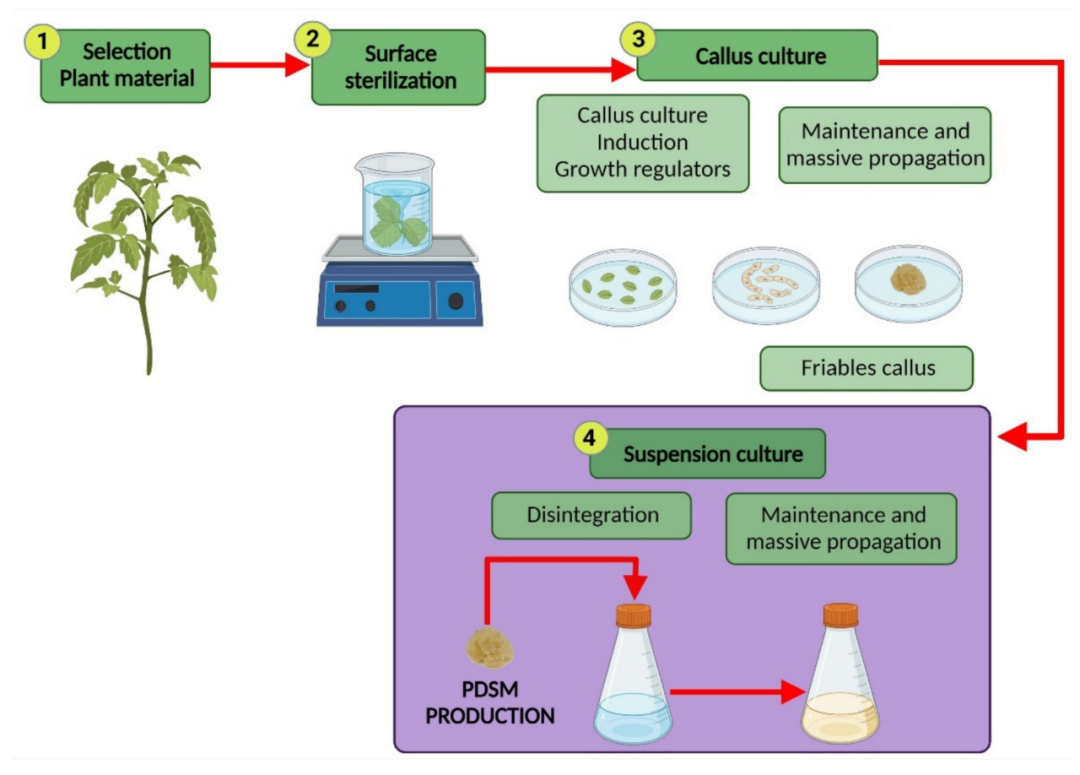
You begin with a healthy explant — leaf, stem, root tip, whatever works for that species — and surface-sterilise it properly. Then you put it on solid medium with the right mix of auxins and cytokinins so it forms friable callus.
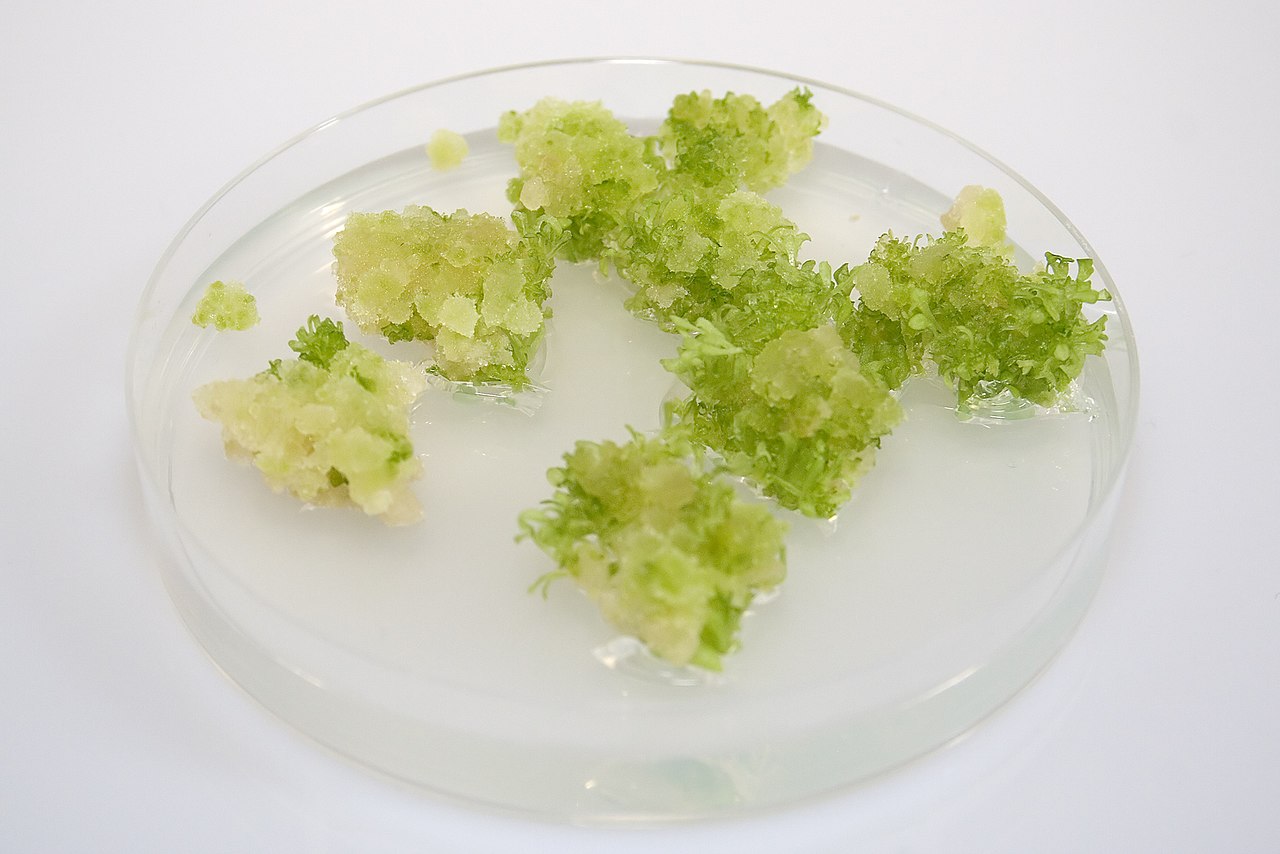
Once you have soft, easily breakable callus, you transfer small pieces into liquid medium of similar composition (MS or B5 is common).
The flasks go on an orbital shaker, typically around 100–150 rpm. Over the next days and weeks the callus starts breaking apart and the cells multiply in suspension. You subculture by taking the finer upper layer and moving it into fresh medium. After a few rounds you get a more uniform suspension. Sometimes a bit of enzyme (pectinase, for example) is used to help break up stubborn clumps.
That’s the basic laboratory method. Scaling it up later is a different story.
Different Ways of Running Suspension Cultures
Batch culture is the simplest. You put a fixed amount of medium and cells in a flask or bioreactor and leave it. The cells go through the familiar lag phase, then exponential growth, then stationary phase, and eventually decline when nutrients run out or waste builds up. A lot of secondary metabolites appear during the stationary phase.
Continuous culture is more controlled. Fresh medium is added steadily and an equal volume of culture is removed at the same rate. In a chemostat the growth rate is set by how fast you dilute a limiting nutrient. In a turbidostat the system tries to keep the cell density constant.
Many industrial plant-cell processes sit somewhere in between and use fed-batch or semi-continuous approaches. These give better productivity without the full complexity of a continuous system.
Growth Behaviour and What You Actually Measure
Plant cells are slow compared with bacteria or even many animal cells. Doubling times of 20–60 hours are common, and sometimes longer. People usually track growth by fresh weight, dry weight, or packed cell volume. Counting individual cells is harder because of the aggregates, so the culture often has to be treated with enzymes first.
Because the cells form clumps, the environment inside a clump is different from the surface. Nutrient and oxygen gradients exist, which is one reason these cultures can be a bit unpredictable.
Medium and Physical Conditions That Matter
The medium needs the usual salts, a carbon source (sucrose is still the most common for plants), vitamins, and growth regulators. Temperature is usually kept around 25 °C for plant cells and 37 °C for mammalian ones. pH, aeration, and shear are critical.
Plant cells are particularly sensitive to shear because they are large and have rigid walls. Too much turbulence and they get damaged. That’s why the type of impeller or the design of the bioreactor matters a lot when you move beyond shake flasks.
Moving to Larger Scale — Bioreactors
In the lab everything happens in Erlenmeyer flasks on shakers. For real production people use stirred-tank bioreactors, air-lift systems, bubble columns, and sometimes wave or disposable bioreactors. Each has trade-offs between mixing, oxygen transfer, and the amount of shear the cells experience.
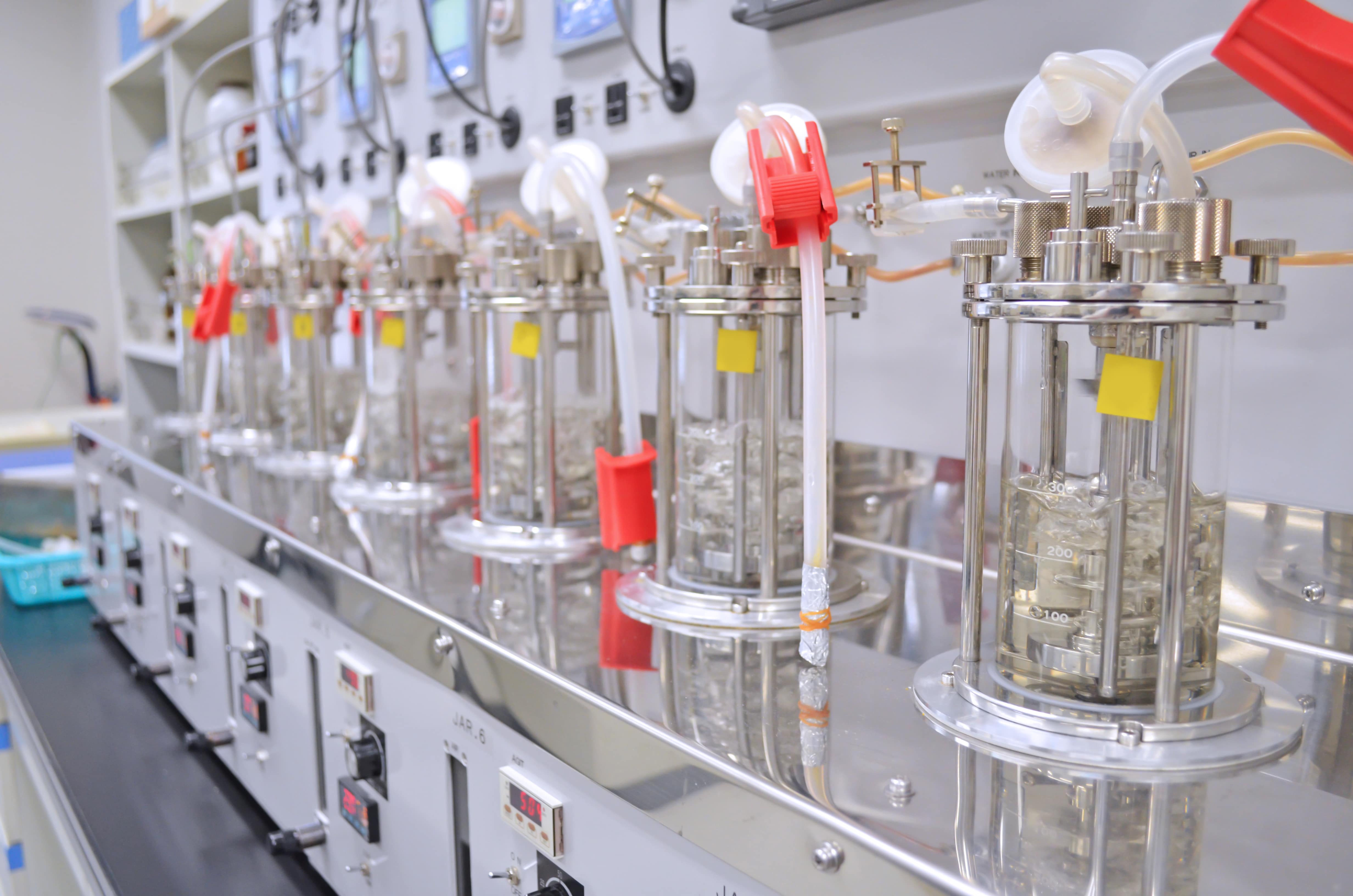

Getting the balance right is still one of the main engineering challenges with plant cell suspensions.
Why People Use This Method
The main attractions are straightforward. Cells get even exposure to whatever you put in the medium — nutrients, elicitors, precursors. Growth is usually faster than on solid callus. Scaling up is easier than with tissue cultures. The whole process stays contained and sterile, which helps with regulatory requirements. And for plant compounds you are no longer tied to seasons or geography.
On the research side, suspension cultures give a relatively simple system for studying metabolism, gene expression, or transformation without the full complexity of a whole plant.
The Downsides
Nothing is perfect. Plant cells love to form aggregates, and those aggregates create problems with mass transfer and culture uniformity. Growth is still slow compared with microbial systems. Long-term cultures can drift genetically or epigenetically. Shear sensitivity limits how hard you can stir. Contamination risk is real because the cultures run for a long time. And downstream processing can be messy because of the cell walls and large vacuoles.
Where It’s Actually Used
In plant biotechnology the big applications are production of secondary metabolites (alkaloids, phenolics, terpenoids and the like) for pharmaceuticals, flavours, fragrances and cosmetics. Some recombinant proteins are also made this way — the classic example is taliglucerase alfa (Elelyso), which is produced in carrot cell suspension. The system is also used for biomass, biotransformation, somatic embryogenesis and selecting mutants.
On the animal side the picture is dominated by large-scale manufacturing of therapeutic proteins, monoclonal antibodies and vaccines. CHO cells in suspension are workhorses for many of these products. The same approach is used for viral vaccines and certain gene-therapy vectors.
Final Thoughts
Cell suspension culture is one of those techniques that sits right at the meeting point of biology and engineering. When it works well it gives you a controlled, scalable way to grow cells and harvest whatever they produce. The limitations are real — aggregation, slow growth, shear sensitivity — but they are manageable with the right medium, the right vessel and enough process knowledge.
For students and researchers it remains a very useful experimental system. For industry it is already a proven production platform for both plant-derived compounds and mammalian biologics. The basics haven’t changed much in decades, but the engineering around it keeps improving, and that is what continues to make the method relevant.
Regeneration limits: Successful culture depends on genotype, tissue state and treatment. Regeneration from an explant does not establish that every cell is totipotent. Auxin–cytokinin balance is a useful teaching pattern, not a universal recipe. Micropropagation multiplies selected material; it does not by itself create a new variety or guarantee pathogen-free, genetically identical plants.


0 Comments