Science is all around us — it explains why your phone charges, why plants grow toward sunlight, why economies rise and fall, and even how your brain processes this sentence right now. But science isn’t one giant subject. It’s divided into clear branches of science that make the vast world of knowledge easier to explore and understand.
In this beginner-friendly guide, you’ll discover the main branches of science, types of science, a full science subjects list, and why each area matters. Whether you’re a student choosing a career or simply curious about fields of science explained, this article breaks everything down simply.
What Are the Branches of Science?
Science is the systematic study of the natural world and human society through observation, experimentation, and logic. To manage its enormous scope, scientists organize knowledge into main branches of science.
Why Divide Science into Branches?
- Makes complex topics manageable
- Allows deep specialization
- Encourages collaboration between fields
- Helps students and professionals focus on what excites them most
The three primary types of science are natural science, social science, and formal science. Some experts also mention applied science as a practical fourth category that uses the others to solve real-world problems.

Figure 1: Main Branches of Science Diagram (Hierarchy Chart) – Natural Science, Social Science & Formal Science
Main Branches of Science
Natural Science
Natural science studies the physical world and everything in it. It answers “how” and “why” questions about nature.
- Physics – Study of matter, energy, motion, and forces (think gravity, electricity, light).
- Chemistry – Study of substances, their properties, and how they react.
- Biology – Study of living organisms, from tiny cells to entire ecosystems.
- Earth Science – Study of our planet: geology, oceans, atmosphere, and weather.
- Astronomy – Study of space, stars, planets, and the universe.
Social Science
Social science explores human behavior, societies, and relationships.
- Sociology – How people interact and form societies.
- Economics – How resources are produced, distributed, and consumed.
- Psychology – How the mind works and influences behavior.
- Political Science – Governments, power, laws, and political systems.
Formal Science
Formal science deals with abstract systems and logic rather than the physical world.
- Mathematics – The language of patterns, numbers, and shapes.
- Statistics – Collecting, analyzing, and interpreting data.
- Logic – Rules of reasoning and valid arguments.
- Computer Science – Study of computation, algorithms, and programming.

Figure 2: Science Classification Tree – Main Branches of Science (Natural, Social & Formal Science)
Sub-Branches of Science
Each main branch splits into exciting sub-branches. Here are popular examples:
From Biology
- Botany (study of plants)
- Zoology (study of animals)
- Microbiology (study of microscopic life)
- Genetics (study of genes and heredity)
From Chemistry
- Organic Chemistry (carbon-based compounds)
- Inorganic Chemistry (non-carbon compounds)
- Biochemistry (chemistry inside living things)
From Physics
- Astrophysics (physics of stars and galaxies)
- Quantum Physics (behavior of tiny particles)
- Thermodynamics (heat and energy transfer)
From Earth Science
- Meteorology (weather and climate)
- Oceanography (oceans)
- Geology (rocks and Earth’s structure)
From Social & Formal Sciences
- Behavioral Economics, Neuropsychology, Data Science, Artificial Intelligence

Figure 3: Sub-Branches of Science Infographic – Branches of Science Explained with Examples
Comparison of Major Science Branches
| Aspect | Natural Science | Social Science | Formal Science |
|---|---|---|---|
| Scope | Physical universe & living things | Human behavior & societies | Abstract systems & logic |
| Methods | Experiments, observation, labs | Surveys, interviews, data analysis | Proofs, models, algorithms |
| Examples | Physics, Biology, Chemistry | Psychology, Economics, Sociology | Mathematics, Computer Science |
| Applications | Technology, medicine, energy | Policy, education, business | Software, AI, cryptography |
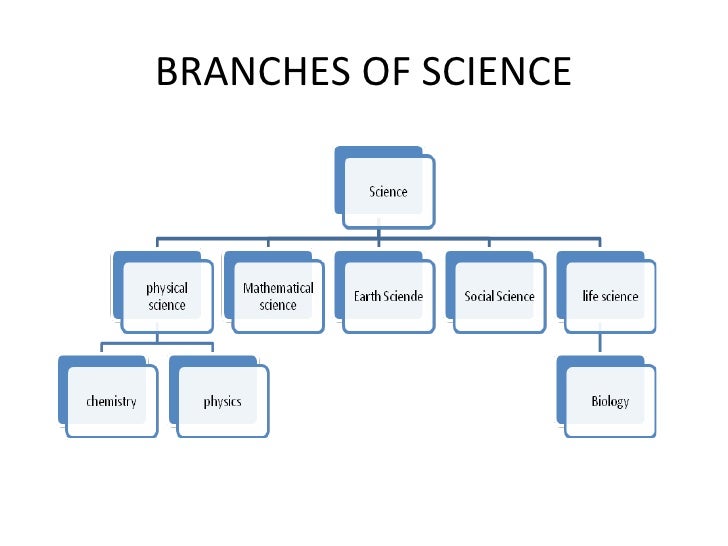
Figure 4: Comparison Graphic – Natural Science vs Social Science vs Formal Science
Importance of Each Branch
Every branch of science shapes our daily lives and future:
- Natural Science powers smartphones, vaccines, renewable energy, and space travel.
- Social Science helps governments make better policies, companies understand customers, and therapists improve mental health.
- Formal Science drives artificial intelligence, big data, secure banking, and video games.
Career Opportunities are booming in every area. Fields like biotechnology, data science, climate modeling, and AI research are growing much faster than average.
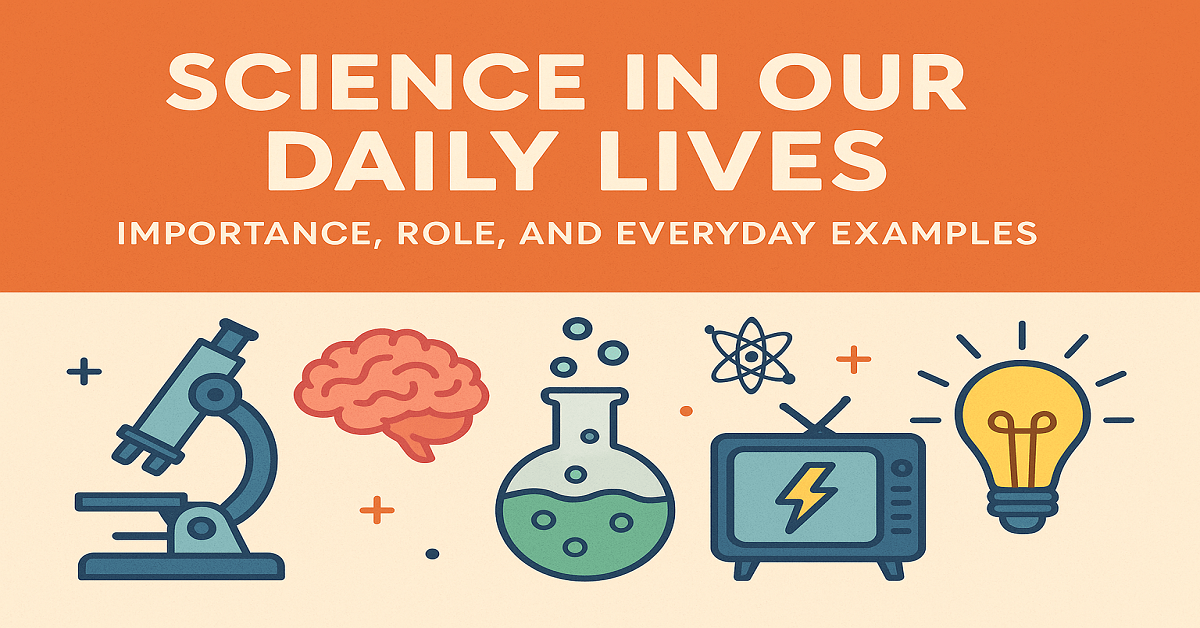
Figure 5: Applications of Science Branches in Daily Life Illustration – Natural, Social & Formal Science
How to Choose a Branch of Science
- Follow your passion – Do you love experiments (natural), people (social), or puzzles (formal)?
- Think about career goals – Medicine? Business? Tech? Research?
- Match your skills – Hands-on lab work, writing & talking, or math & coding?
Talk to teachers, try introductory courses, or explore free online resources from Britannica or National Geographic.
Future of Science Branches
The most exciting developments today are interdisciplinary — fields that combine multiple branches:
- Bioinformatics (biology + computer science)
- Climate AI modeling (earth science + formal science)
- Neuroeconomics (psychology + economics)
- Quantum computing (physics + computer science)
- Synthetic biology and personalized medicine
Artificial intelligence is transforming every branch, speeding up discoveries in drug design, space exploration, and social trend prediction.

Figure 6: Future of Science Branches AI Integration Infographic – Emerging Fields
FAQ – Branches of Science
What are the main branches of science? The three main branches are natural science, social science, and formal science.
How many types of science are there? Generally three core types, though some classifications add applied science as a fourth.
What is the difference between natural and social science? Natural science studies the physical world through experiments; social science studies human behavior and societies through observation and data.
Which branch of science is best for a career? The “best” depends on your interests. Natural science offers strong job growth in tech and healthcare; formal science leads in high-paying AI and data roles.
Is computer science a formal or natural science? It is classified as a formal science because it deals with abstract systems and logic.
What are the most important science subjects for students? Physics, chemistry, biology, mathematics, and computer science form the foundation for almost every career.
How do branches of science work together? Modern problems like climate change or pandemics require experts from natural, social, and formal sciences to collaborate.
Conclusion
Understanding the branches of science opens doors to endless possibilities. Whether you dream of curing diseases, exploring space, building intelligent machines, or shaping fair societies, there’s a perfect scientific path waiting for you.
Science is not just school subjects — it’s the key to solving humanity’s biggest challenges and creating a better future. Start exploring one branch today, and who knows where your curiosity will lead!
Ready to dive deeper into any specific branch? Let us know in the comments!


0 Comments