💧 The Soil-Plant-Atmosphere Continuum
SPAC: Dynamics of Water Movement from Soil to Atmosphere
Introduction to SPAC
The Soil-Plant-Atmosphere Continuum (SPAC) is a fundamental concept in plant physiology and ecology that describes the interconnected processes governing water movement and exchange between soil, plants, and the atmosphere. This continuum illustrates the dynamic relationship and constant flow of water from the soil through plants and into the atmosphere.
1. Soil Component of SPAC
📖 Soil Water Dynamics
The soil component represents the starting point of the water continuum, where water is stored and made available for plant uptake through root systems.
Key Processes in Soil
Water Absorption by Roots
Roots of plants absorb water from the soil through a process known as root water uptake. This occurs primarily through root hairs in the zone of maturation, where water enters by osmosis down a water potential gradient.
Soil Moisture Movement
Water moves through the soil profile, driven by factors such as:
- Gravity: Downward movement through soil profile
- Capillary action: Movement through small soil pores
- Matric forces: Adhesion to soil particles
- Osmotic gradients: Movement toward root surfaces
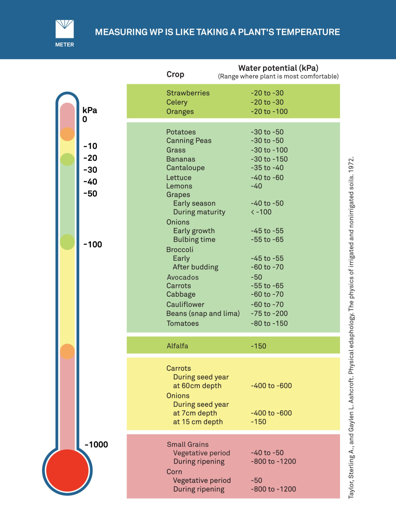
🔬 Soil Water Potential
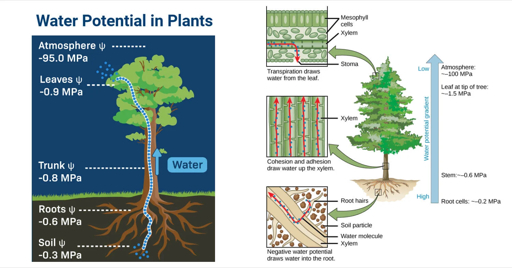
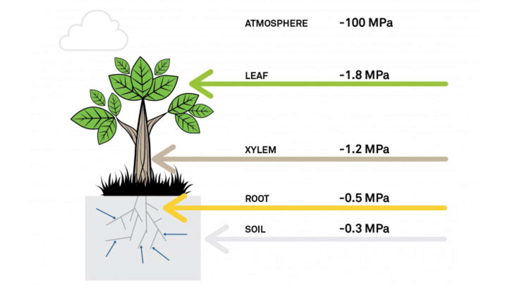
Soil water potential (Ψsoil) typically ranges from -0.01 to -1.5 MPa depending on soil moisture content. Water moves from higher potential (wetter soil) to lower potential (drier soil or root surface).
2. Plant Component of SPAC
📖 Plant Water Transport
The plant serves as a biological conduit, facilitating water movement from roots to leaves while simultaneously transporting nutrients and maintaining cellular turgor pressure essential for growth and metabolism.
Transpiration: The Driving Force
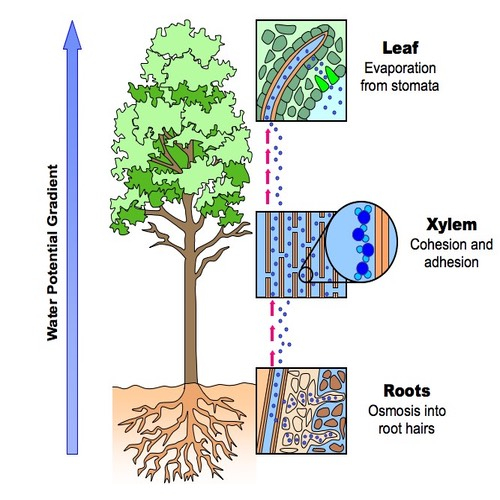
Transpiration is the process by which water absorbed by plant roots is transported to the leaves and then evaporates into the atmosphere through small openings called stomata. This process is the primary driver of water movement in the SPAC.
Cohesion-Tension Theory
Water movement through plants is explained by the cohesion-tension theory:
- Transpiration pull: Evaporation from leaf mesophyll cells creates negative pressure (tension)
- Cohesion: Water molecules stick together via hydrogen bonds, forming continuous columns
- Adhesion: Water molecules adhere to xylem vessel walls, preventing column collapse
- Tension transmission: Negative pressure is transmitted from leaves to roots
⚡ Physics of Water Transport
Transpiration creates tension equivalent to -2 MPa at leaf surfaces. This negative pressure pulls the entire water column upward through xylem vessels, overcoming gravity and allowing water to reach heights of 100+ meters in tall trees.
Water Movement Pathways
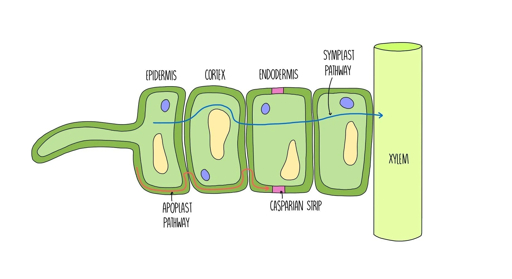
The plant facilitates water movement through multiple pathways:
🌱 Apoplast Pathway
Water moves through cell walls and intercellular spaces without crossing membranes. Fast but blocked by Casparian strip in endodermis.
🔵 Symplast Pathway
Water moves through cytoplasm connected by plasmodesmata. Slower but allows selective transport and regulation.
🌊 Transmembrane Pathway
Water crosses cell membranes via aquaporins. Allows precise control of water movement and solute exchange.
3. Atmosphere Component
📖 Atmospheric Water Exchange
The atmosphere represents the terminal point of the SPAC, where water vapor released from plant surfaces enters the air through evaporation and transpiration (collectively called evapotranspiration).
Evaporation and Humidity
Evaporation is the process by which water vapor released from plant surfaces (leaves, stems) enters the atmosphere. This process is influenced by:
- Humidity: Lower atmospheric humidity increases evaporation rate
- Temperature: Higher temperatures increase water vapor capacity of air
- Wind speed: Air movement removes saturated boundary layer
- Radiation: Solar energy provides heat for phase change
Environmental Factors Affecting SPAC
🌡️ Temperature
- Higher temperature → increased evaporation
- Increases water vapor capacity of air
- Accelerates transpiration rate
- May cause stomatal closure if excessive
💧 Humidity
- Low humidity → steep gradient → high transpiration
- High humidity → reduced gradient → low transpiration
- Affects vapor pressure deficit (VPD)
- Critical for plant water balance
☀️ Light Intensity
- Stimulates stomatal opening
- Increases leaf temperature
- Enhances photosynthesis and transpiration
- Drives diurnal transpiration patterns
4. Continual Water Movement
📖 The Continuous Cycle
The movement of water through the SPAC is a continuous cycle, with water being absorbed by roots, transported through the plant vascular system, and released into the atmosphere through transpiration and evaporation.
Water Potential Gradient
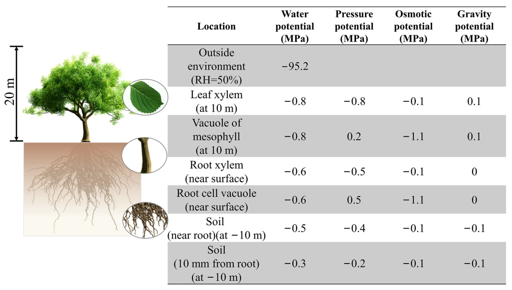
Water moves down a gradient of decreasing water potential (Ψ):
🔬 Water Potential Equation
Total water potential (Ψ) is the sum of components:
Ψ = Ψs + Ψp + Ψg + Ψm
Where: Ψs = solute potential, Ψp = pressure potential, Ψg = gravitational potential, Ψm = matric potential
5. Regulatory Mechanisms
📖 Plant Control Systems
Plants possess sophisticated regulatory mechanisms to control water movement through the SPAC, balancing water loss with carbon gain and maintaining hydraulic integrity.
Stomatal Regulation
Stomatal regulation is the primary mechanism by which plants control water loss. Stomata adjust their opening and closing in response to environmental conditions:
- Light intensity: Stomata open in light for photosynthesis
- Water availability: Drought triggers stomatal closure via ABA hormone
- CO₂ concentration: Low CO₂ promotes opening, high CO₂ promotes closure
- Temperature: Extreme heat can trigger closure to prevent water loss
- Circadian rhythm: Endogenous clock regulates stomatal aperture
Root Uptake Control
Root systems play a crucial role in controlling water absorption based on:
- Soil moisture levels: Roots proliferate in moist soil zones
- Nutrient availability: Water uptake coupled with nutrient absorption
- Root hydraulic conductivity: Aquaporins regulate water permeability
- Root architecture: Deep roots access deeper water reserves
⚡ Aquaporins: Water Channels
Aquaporins are membrane proteins that facilitate rapid water movement across cell membranes. Their activity is regulated by:
- pH changes
- Calcium concentration
- Phosphorylation
- Oxidative stress
This allows plants to rapidly adjust water permeability in response to environmental conditions.
6. Environmental Impact
📖 Climate and Ecosystem Effects
The SPAC is profoundly influenced by climatic factors and plays a critical role in ecosystem functioning, affecting water cycling, nutrient dynamics, and climate regulation.
Climate Influence on SPAC
Variations in climatic factors impact the rate of water movement and exchange within the continuum:
🌡️ Temperature Effects
- Higher temperature → increased transpiration
- Alters vapor pressure deficit
- May exceed plant cooling capacity
- Heat stress triggers protective responses
🌧️ Precipitation Patterns
- Determines soil water availability
- Affects root water uptake
- Drought reduces transpiration
- Flooding causes oxygen deficiency
💨 Wind Speed
- Removes boundary layer saturation
- Increases transpiration rate
- Enhances CO₂ uptake
- May cause mechanical stress
Ecological Significance
The SPAC is critical for:
- Plant survival and growth: Maintains water balance and turgor pressure
- Nutrient cycling: Transpiration stream transports dissolved minerals
- Soil structure: Root water uptake affects soil aggregation
- Microorganism activity: Soil moisture influences microbial communities
- Ecosystem water balance: Regulates evapotranspiration and runoff
- Climate regulation: Transpiration contributes to atmospheric humidity and cooling
7. Applications and Importance
🔑 Why Understanding SPAC Matters
- Agriculture: Optimizes irrigation strategies and water management
- Ecology: Explains plant-water relations in natural ecosystems
- Environmental Science: Informs water resource management
- Climate Science: Contributes to understanding evapotranspiration and climate feedbacks
- Forestry: Guides sustainable forest and watershed management
- Conservation: Supports biodiversity and ecosystem sustainability
8. Frequently Asked Questions
❓ SPAC FAQs
- What is the Soil-Plant-Atmosphere Continuum (SPAC) and why is it important in ecology?
Answer: The SPAC represents the interconnected processes governing water movement between soil, plants, and the atmosphere. It is crucial in understanding ecological dynamics, particularly in terrestrial ecosystems. - How does water move through the SPAC, and what role do plants play in this continuum?
Answer: Water is absorbed by plant roots from the soil, transported through the plant via xylem, and released into the atmosphere through transpiration. Plants serve as biological conduits for water movement. - What factors influence the rate of water movement within the SPAC?
Answer: Factors include climate (temperature, humidity, wind), soil moisture, water potential gradients, plant characteristics (stomatal conductance, root architecture), and atmospheric conditions. - Why is transpiration an essential process in the SPAC, and how does it impact plant health?
Answer: Transpiration is crucial for nutrient transport, temperature regulation, and maintaining turgor pressure. It impacts plant health by driving water and nutrient uptake from soil. - How do environmental factors like humidity and temperature affect the SPAC?
Answer: Humidity and temperature influence the rate of evaporation and water vapor movement in the atmosphere, playing a critical role in SPAC dynamics and transpiration rates. - What are the regulatory mechanisms in the SPAC that control water movement?
Answer: Stomatal regulation (adjusting stomatal aperture) and root uptake control (based on soil moisture) are key regulatory mechanisms. Aquaporins also regulate membrane water permeability. - How does the SPAC impact agricultural practices, and what are the implications for water management in farming?
Answer: Understanding SPAC is vital for optimizing irrigation strategies, nutrient delivery, crop water use efficiency, and overall water management practices in agriculture. - What role does the SPAC play in ecosystem sustainability and biodiversity?
Answer: The SPAC influences nutrient cycling, soil structure, and microbial activity, contributing to ecosystem sustainability and supporting biodiversity in terrestrial ecosystems. - How do changes in climate patterns affect the SPAC, and what are the potential consequences for ecosystems?
Answer: Climate changes alter SPAC dynamics, affecting water availability, plant growth, and ecosystem health, with potential consequences for biodiversity, productivity, and ecosystem services. - Are there practical applications or technologies based on the understanding of the SPAC?
Answer: Yes! Technologies include soil moisture sensors, irrigation scheduling systems, drought-resistant crop breeding, and precision agriculture tools that optimize water use and minimize environmental impact.
📚 References
Core Textbooks:
- Taiz, L., Zeiger, E., Møller, I.M. & Murphy, A. (2015). Plant Physiology and Development (6th ed.). Sinauer Associates.
- Lambers, H. (2019). Plant Physiological Ecology (3rd ed.). Springer.
- Hopkins, W.G. & Hüner, N.P.A. (2008). Introduction to Plant Physiology (4th ed.). Wiley.
Scientific Articles:
- Boehm, G. (1893). Capillarität und Transpiration. Vienna.
- Dixon, H.H. & Joly, J. (1894). On the ascent of sap. Philosophical Transactions of the Royal Society B, 186: 563-576.
- Sperry, J.S. et al. (2002). Xylem cavitation and hydraulic control of stomatal conductance in laurel. Plant, Cell & Environment.
Image Sources:
- Trends in Plant Science: SPAC Diagram
- METER Group: Water Potential Charts
- BioNinja: Transpiration Stream
- MDPI Water: Water Potential Gradients
- YouTube: SPAC Educational Diagrams


0 Comments