
🌿 Characteristics of Plant Populations
Dispersion, Dispersal, Movement & Population Fluctuations
🔍 Introduction: Why Spatial and Temporal Patterns Matter
Understanding characteristics of plant populations requires ecologists to know not only how many plants are present, but also where they occur, how they are spatially arranged, how seeds and propagules move, and how populations change through time. These spatial and temporal patterns reveal fundamental ecological processes: competition, facilitation, dispersal limitations, habitat heterogeneity, and responses to environmental change.
This guide explores four interconnected themes: dispersion (spatial arrangement), dispersal (seed movement), movement (broader processes), and population fluctuations (temporal changes). Together, these determine how plant populations persist, expand, and respond to changing environments.
📍 What Is Dispersion?
📖 Definition: Population Dispersion
Dispersion (or distribution pattern) is the spatial arrangement of individuals within a population. It describes where individuals occur relative to one another in space at a given moment.
Dispersion answers: Are plants clustered? Evenly spaced? Or randomly scattered? Importantly, dispersion describes a pattern, not the process that created it.
🎯 Three Major Dispersion Patterns
🔵 Clumped Dispersion
Individuals occur in groups, patches, or clusters. Most common in natural plant populations due to patchy resources, limited seed dispersal, and vegetative reproduction.
🟢 Uniform Dispersion
Individuals are relatively evenly spaced. Results from intense competition, allelopathy, or human planting (orchards, row crops).
🟡 Random Dispersion
Positions are approximately independent. Relatively uncommon—requires homogeneous habitat and weak interactions among individuals.

🌿 Clumped Dispersion (Most Common)
🔬 Why Is Clumping So Common?
- Patchy resources: Soil nutrients, water, and light vary across landscapes—plants cluster where conditions are favorable
- Limited seed dispersal: Most seeds fall near parent plants, creating recruitment clusters
- Vegetative reproduction: Rhizomes, stolons, bulbs create local clusters of genetically identical ramets
- Facilitation: Some plants create favorable microsites (shade, moisture, nitrogen) enabling neighbors to establish
- Disturbance: Fire, grazing, flooding create patches suitable for establishment
🌾 Example: Grassland Tussocks
In temperate grasslands, grasses like Festuca and Bouteloua form distinct clumps (tussocks) separated by bare ground. This results from vegetative growth (tillers remain connected), favorable microsites, and competitive exclusion of neighbors.
📐 Uniform Dispersion
📖 Definition: Uniform Dispersion
Uniform dispersion occurs when individuals are relatively evenly spaced, with approximately equal distances between neighboring plants.
🔬 What Causes Uniform Spacing?
- Intense competition: Root competition for water/nutrients, canopy competition for light
- Allelopathy: Chemical inhibition prevents nearby seedling establishment
- Self-thinning: Density-dependent mortality eliminates weaker individuals, leaving survivors evenly spaced
- Agricultural planting: Humans create artificial uniform patterns (orchards, row crops)
🌲 Example: Desert Shrubs
In arid ecosystems, shrubs like Larrea (creosote bush) often show remarkably uniform spacing. Extensive root systems compete for scarce water, and allelopathic chemicals may inhibit nearby seedlings, creating regular patterns visible from aircraft.
🎲 Random Dispersion
📖 Definition: Random Dispersion
Random dispersion occurs when positions of individuals are approximately independent of one another, without obvious clustering or regular spacing.
⚠️ Is True Random Common?
No. Random dispersion requires specific, uncommon conditions:
- Homogeneous habitat (uniform soil, moisture, light)
- Weak interactions among individuals (minimal competition or facilitation)
- Random seed dispersal
- No social attraction benefits
What appears random at one scale may show clumping or uniformity at finer or coarser scales.
📊 Dispersion vs. Density: Critical Distinction
⚖️ Key Distinction
Density = How many individuals per unit area (numerical abundance)
Dispersion = How arranged in space (spatial pattern)
Two populations can have similar density but different dispersion, or different density but similar dispersion. These are independent characteristics!
🚀 What Is Dispersal?
📖 Definition: Plant Dispersal
Dispersal is the movement of seeds, spores, fruits, pollen, or vegetative propagules away from their source or parent location. Dispersal is a process that moves propagules through space.
⚠️ Critical Distinction
Dispersion = Spatial pattern (static arrangement)
Dispersal = Movement process (dynamic movement away from source)
Dispersion is the result; dispersal is one cause of that result.
🌍 Ecological Importance of Dispersal
- Colonization of new sites and habitats
- Gene flow between populations (reduces inbreeding)
- Escape competition near parent plants
- Range expansion and recovery after disturbance
- Habitat connectivity in fragmented landscapes
🌬️ Major Dispersal Mechanisms
A. Abiotic Dispersal
1. Wind Dispersal (Anemochory)
- Adaptations: Wings (maple, ash), hairs/plumes (dandelion, milkweed), lightweight seeds (orchids)
- Distance: Meters to kilometers depending on morphology and wind
- Examples: Dandelion, maple, many grasses
2. Water Dispersal (Hydrochory)
- Adaptations: Floating structures, air-filled tissues, waterproof coats
- Distance: Can be very long via ocean currents
- Examples: Coconut, mangroves, water lilies
3. Gravity Dispersal (Barochory)
- Mechanism: Heavy seeds/fruits fall directly beneath or near parent
- Distance: Very short (0-5 meters)
- Examples: Oak acorns, large-seeded trees
B. Biotic Dispersal
1. Animal Dispersal (Zoochory)
- Endozoochory (internal): Animals eat fruits; seeds pass through gut and deposited in feces (berries, drupes)
- Epizoochory (external): Seeds attach to fur/feathers via hooks/spines (burdock, cocklebur)
- Synzoochory (caching): Animals store seeds for later; some not recovered and germinate (jays caching acorns)
2. Human-Mediated Dispersal
- Agriculture, transportation, trade, horticulture
- Soil movement, construction
- Both beneficial (crop establishment) and harmful (invasive species spread)
🎯 Specialized Dispersal Adaptations
🌑 Seed Shadow & Dispersal Kernel
📖 Seed Shadow
A seed shadow is the spatial distribution of seeds around a source plant following dispersal. It shows high seed density near the parent, declining with distance.
📖 Dispersal Kernel
A dispersal kernel describes the probability distribution of dispersal distances from a source. Most seeds (>90%) disperse short distances, but rare long-distance events are crucial for colonization and range expansion.
💡 Key Insight
Most seeds stay near home, but rare long-distance travelers shape biogeography. A single long-distance event can establish a population hundreds of kilometers away.
🏃 Can Plants Move?
🤔 Answer: Yes and No
No: Mature rooted plants cannot relocate like animals.
Yes: Plants move through:
- Seeds and fruits: Disperse away from parents
- Pollen: Moves between individuals (wind or animals)
- Vegetative propagules: Rhizomes, stolons, bulbs spread clonally
- Clonal expansion: Single genet expands spatial footprint over time
At the population level, plants are mobile through their propagules!
🌱 Types of Plant Movement
- Seed movement: Dispersal away from parent plants
- Pollen movement: Between individuals via wind or animals (gene flow)
- Clonal movement: Expansion through rhizomes, stolons, root suckers
🌳 Example: Quaking Aspen
Pando, a quaking aspen colony in Utah, covers 43 hectares with ~47,000 genetically identical stems connected by one root system. This demonstrates extensive clonal movement over millennia—one of Earth's largest organisms!
📈 Population Fluctuations
📖 Definition: Population Fluctuation
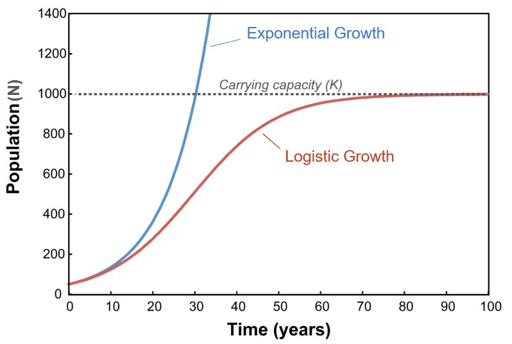
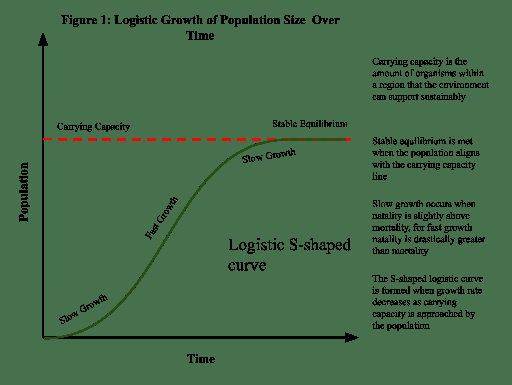
Population fluctuation is variation in population size or density through time. Plant populations may increase, decrease, or remain stable depending on environmental conditions and biotic interactions.
📊 Three Major Fluctuation Patterns
📊 Relatively Stable
Population remains within narrow range over time, with small variations around mean. Maintained by density-dependent regulation, stable resources, balanced birth/death rates.
🔄 Cyclic
Repeated increases and decreases with recurring temporal pattern (seasonal or multi-year). Caused by seasonal changes, herbivore cycles, climate oscillations, mast seeding.
📈 Irruptive
Rapid, substantial increase followed by decline/crash. Triggered by resource pulses, favorable conditions, disturbance, invasive species establishment.
⚖️ Density-Dependent vs. Density-Independent Regulation
🔥 Disturbance and Fluctuations
Disturbance (fire, floods, grazing, deforestation) can:
- Reduce population size (direct mortality)
- Create regeneration opportunities (opens space/resources)
- Release resources (removes competitors)
- Increase recruitment (stimulates germination)
- Trigger irruptions in disturbance-adapted species
🌲 Example: Post-Fire Lodgepole Pine
Lodgepole pine has serotinous cones that open only after fire. Following wildfire, massive seed release creates dense seedling regeneration (thousands/hectare), demonstrating how disturbance triggers population irruptions in fire-adapted species.
❌ Common Misconceptions
🔍 Misconception 1: Dispersion = Density
Correction: Density = how many per area; Dispersion = how arranged in space. Independent characteristics!
🔍 Misconception 2: Dispersion = Dispersal
Correction: Dispersion = spatial pattern (static); Dispersal = movement process (dynamic). Pattern vs. process!
🔍 Misconception 3: Random Dispersion Is Common
Correction: Random is actually uncommon. Most plant populations show clumped dispersion due to patchy resources and limited dispersal.
🔍 Misconception 4: Plants Cannot Move
Correction: Mature plants can't relocate, but populations move through seeds, pollen, and clonal expansion. Plants are mobile at population level!
🔍 Misconception 5: Stable = No Change
Correction: "Stable" populations still fluctuate—just within narrow range around mean. Truly constant populations are virtually unknown.
🔑 Key Takeaways
📌 Essential Points
- Dispersion describes spatial arrangement—clumped, uniform, or random
- Clumped is most common (patchy resources, limited dispersal, vegetative reproduction)
- Dispersal describes movement away from source—seeds, spores, propagules moving through space
- Dispersion ≠ Dispersal—pattern vs. process; students must distinguish these
- Plants move through seeds, pollen, vegetative structures, and clonal expansion
- Seed shadows show high density near parent, declining with distance
- Dispersal kernels quantify distances—rare long-distance events shape biogeography
- Population fluctuations describe temporal changes—stable, cyclic, or irruptive patterns
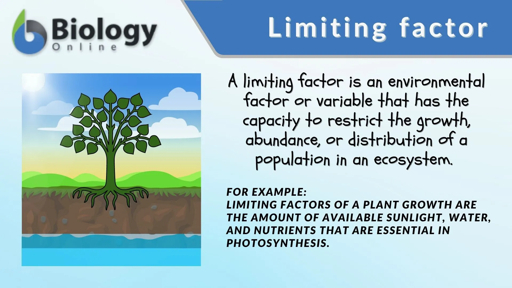
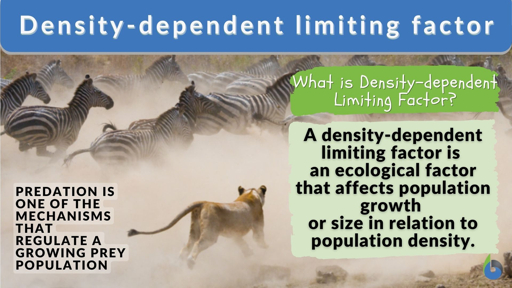
- Density-dependent factors regulate populations (competition, disease)
- Density-independent factors cause sudden changes (drought, fire, floods)
- Disturbance shapes dynamics—creates opportunities, triggers irruptions
- Spatial and temporal processes interact—dispersion affects dynamics; dynamics alter dispersion
❓ FAQs
🔍 Frequently Asked Questions
A: Dispersion is the spatial arrangement of individuals within a population—whether plants are clustered (clumped), evenly spaced (uniform), or randomly scattered.
A: (1) Clumped—individuals in groups; (2) Uniform—individuals evenly spaced; (3) Random—positions independent. Clumped is most common in nature.
A: Resources are patchy (soil, water, light vary), most seeds fall near parents, many plants reproduce vegetatively (rhizomes, stolons), and some plants facilitate neighbors.
A: Dispersion = spatial pattern (static arrangement); Dispersal = movement process (seeds/propagules moving away from source). Pattern vs. process!
A: Wind (wings, hairs), water (floating), animals (internal via fruits or external via hooks), gravity (seeds fall near parent), explosive (fruits eject seeds), and human-mediated.
A: Spatial distribution of seeds around a source plant—typically high density near parent, declining with distance.
A: Mature rooted plants can't relocate like animals, but populations move through seeds, pollen, vegetative propagules, and clonal expansion. Plants are mobile at population level!
A: Variation in population size through time. Patterns include: relatively stable (small variations), cyclic (repeated peaks/troughs), and irruptive (rapid increase then crash).
A: Seasonal changes, herbivore cycles, climate oscillations (ENSO), mast seeding, pathogen outbreaks, and competitive interactions.
A: Rapid, substantial population increase followed by decline/crash. Caused by resource pulses, favorable conditions, disturbance, or invasive species.
📝 Exam Questions
Short Questions (5 marks each)
- Define population dispersion and list the three major types.
- Why is clumped dispersion the most common pattern in plants?
- Distinguish between dispersion and density with examples.
- What is the difference between dispersion and dispersal?
- List four mechanisms of seed dispersal with examples.
- What is a seed shadow? Describe its typical shape.
- Can plants move? Explain with examples.
- Define population fluctuation and list three patterns.
- Compare density-dependent and density-independent factors.
- How does disturbance affect plant populations?
Long Questions (10 marks each)
- Describe the three major types of population dispersion. For each, explain ecological mechanisms and provide plant examples.
- Why is clumped dispersion most common? Discuss at least five mechanisms with specific examples.
- Distinguish among dispersion, dispersal, and movement. Provide definitions, examples, and explain relationships.
- Describe major seed dispersal mechanisms. Include abiotic (wind, water, gravity) and biotic (animals, human) with adaptations and examples.
- Compare relatively stable, cyclic, and irruptive population fluctuations. Explain patterns, causes, and provide examples for each.
- How do density-dependent and density-independent factors differ? Provide four examples of each and explain their effects on population dynamics.


.jpg)





0 Comments